duminică, 2 decembrie 2007

Roger Waters

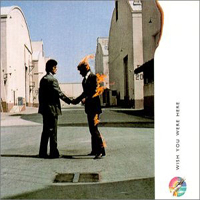
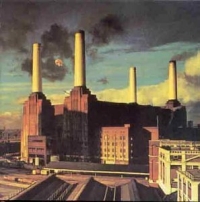
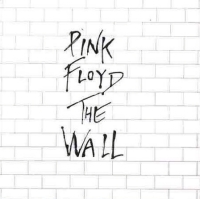
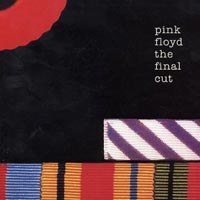
George Roger Waters (born 6 September 1943) is an English rock musician; singer, guitarist, bassist, songwriter, and composer. He is best known for his 1965–1985 career with the band Pink Floyd (he was credited as their main songwriter, after the departure of Syd Barrett), bass player and one of their lead vocalists (along with David Gilmour and, to a lesser extent, Rick Wright). He was also the lyrical mastermind behind many of the band's concept albums, especially The Dark Side of the Moon, Wish You Were Here, Animals, The Wall, and The Final Cut, and their well known symbols including the Pink Floyd pigs and the marching hammers.

Following this, he began a moderately successful solo career releasing three studio albums and staging one of the largest concerts ever, The Wall Concert in Berlin in 1990. In 2005 he released an opera, Ça Ira, and joined Pink Floyd at the Live 8 concert in London, on 2 July 2005, for their first public performance with Waters in 24 years.

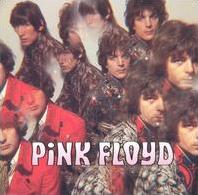
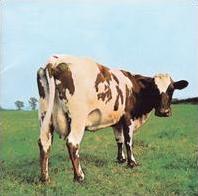
In 1965, Roger Waters co-founded Pink Floyd (after many different incarnations—see Pink Floyd) along with Syd Barrett, Richard Wright and Nick Mason. Although Barrett initially did most of the songwriting for the band, Waters wrote the song "Take Up Thy Stethoscope and Walk" on their debut LP, The Piper at the Gates of Dawn. The album was a critical success and positioned the band for stardom. Barrett's deteriorating mental health led to increasingly erratic behaviour, rendering him unable to continue in his capacity as Pink Floyd's lead singer and guitarist. Waters attempted to coerce his friend into psychiatric treatment; this proved unhelpful, and the band approached David Gilmour to replace Barrett at the end of 1967. Even the band's former managers felt that Pink Floyd would not be able to sustain its initial success without the talented Barrett. Filling the void left by Barrett's departure, Waters began to chart Pink Floyd's new artistic direction. The lineup with Gilmour and Waters eventually brought Pink Floyd to prominence, producing a series of albums in the 1970s that remain among the most critically acclaimed and best-selling records of all time.

In 1970, Waters collaborated with British composer Ron Geesin (who co-wrote Pink Floyd's title suite from Atom Heart Mother) on a soundtrack album, Music from "The Body", which consisted mostly of instrumentals interspersed with songs composed by Waters. Within Pink Floyd, Waters became the main lyrical contributor, exerting progressively more creative control over the band: he produced thematic ideas that became the impetus for concept albums such as The Dark Side of the Moon and Wish You Were Here, for which he wrote all of the lyrics and some of the music. After this, Waters became the primary songwriter, composing Animals and The Wall largely by himself (though continuing to collaborate with Gilmour on a few tracks).

Waters' band-mates were happy to allow him to write the band's lyrics and guide its conceptual direction while they shared the opportunity to contribute musical ideas (Gilmour described Waters as "a very good motivator and obviously a great lyricist,"[2] even at the height of the acrimony between them in 1995). Some of the band's most popular and beloved songs, including "Echoes", "Time", "Us and Them", "Wish You Were Here" and "Shine On You Crazy Diamond", feature the strong synergy of Waters' sharp lyrical instincts combined with the melodic talent of Gilmour, the soft, precise drumming of Nick Mason, and atmospheric patterns of keyboardist Richard Wright ("Us and Them", for instance, began as a sweetly melodic Wright keyboard instrumental and gained poignancy when Waters added plaintive antiwar lyrics). Unfortunately, this give-and-take relationship began to dissolve: a consequence of the band's collective ennui, according to Waters. Song-writing credits were a source of contention in these difficult years; Gilmour has noted that his contributions to tracks like "Another Brick in the Wall, Part II", with its blistering guitar solo, were not always noted in the album credits. Nick Mason addresses the band in-fighting in his memoir, Inside Out: A Personal History of Pink Floyd, characterizing Waters as being egomaniacal at times. It was while recording The Wall that Waters decided to fire Wright, after Wright's personal problems began to affect the album production. Wright stayed with the band as a paid session musician while Waters led the band through a complete performance of his opus on every night of the brief tour that followed (for which Gilmour acted as musical director).

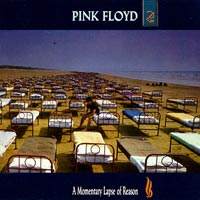
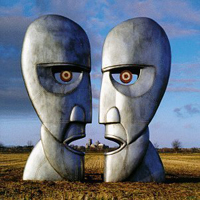
In 1983 , the last Waters–Gilmour–Mason collaboration, The Final Cut, was released. The sleeve notes describe it as being a piece "by Roger Waters" that was "performed by Pink Floyd" (rather than an actual Pink Floyd record). So, to many the album came across more like a Roger Waters solo album than Pink Floyd (similar to A Momentary Lapse of Reason and The Division Bell being tagged as Gilmour solo albums). It was the lowest selling Pink Floyd album in a decade without a hit single. Gilmour unsuccessfully tried to delay production on the album until he could author more material; Waters refused, and in 1985, he proclaimed that the band had dissolved due to irreconcilable differences. The ensuing battle between Waters and Gilmour over the latter's intention to continue to use the name Pink Floyd descended into threatened lawsuits and public bickering in the press. Waters claimed that, as the original band consisted of himself, Syd Barrett, Nick Mason and Richard Wright, Gilmour could not reasonably use the name Pink Floyd now that it was without three of its founding members[citation needed]. Another of Waters' arguments was that he had written almost all of the band's lyrics and a great part of the music after Barrett's departure. However, through agreement, Gilmour and Mason won the right to use the name and a majority of the band's songs, though Waters did retain the rights to the albums The Wall (save for three of the songs that Gilmour co-wrote), Animals, and The Final Cut, as well as claiming ownership of the famous Pink Floyd pigs.

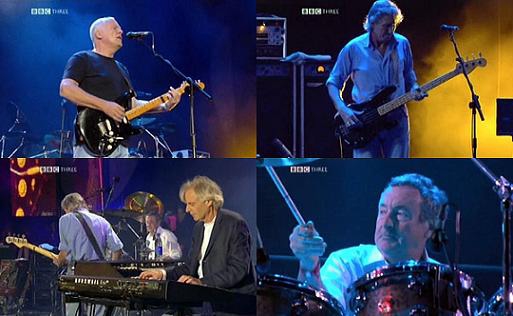
For many fans and casual listeners, the collaborative years of 1971–1979 remain the "classic" Pink Floyd years due to the albums released and prominence of Pink Floyd in music culture; a 1987 end-of-year review in Rolling Stone noted that Waters' solo effort Radio K.A.O.S. and the post-Waters Pink Floyd album A Momentary Lapse of Reason, if taken together, might have made a nice follow-up to The Dark Side of the Moon. In 2005, Waters agreed to rejoin Pink Floyd on stage for Live 8, and on 2 July 2005, Roger Waters, David Gilmour, Nick Mason, and Rick Wright performed together on-stage for the first time since the June 1981 Wall concerts at Earl's Court in London.

David Gilmour

David Jon Gilmour was born on 6th March 1946 in Cambridge, England, the second child of Douglas Gilmour, a senior lecturer in Zoology at the University and Sylvia, a teacher. Best known as guitarist, vocalist and writer with Pink Floyd, he is also renowned for his solo work and collaborations with other artists including Kate Bush, Paul McCartney, and Pete Townshend.

David Gilmour and Roger 'Syd' Barrett met as children in Cambridge and later, whilst studying at the Cambridgeshire College of Arts and Technology, began playing guitar together. In 1965 they spent a summer hitchhiking and busking around the South of France before Syd joined Roger Waters, Nick Mason and Rick Wright to form Pink Floyd, and David continued playing with his own band Jokers Wild, subsequently touring Europe with Flowers, and later Bullitt.
David was asked to augment the Pink Floyd line up as the singer and guitarist in 1967, only for Syd to leave the group five gigs later, struggling with mental illness.

David's guitar playing and song writing became major factors of Pink Floyd's worldwide success during the 1970s, including his distinctive vocals and guitar playing on The Dark Side Of The Moon, the third most successful album of all time. As a side project, David released his first solo album David Gilmour in 1978. Featuring Rick Wills on bass and Willie Wilson on drums & percussion, the album charted in the UK and the US.

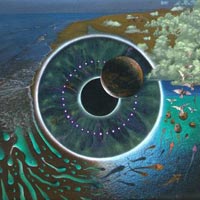
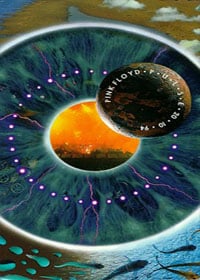
David's second solo album About Face was released in 1984, again hitting the Top 20 in the UK. David assumed control of Pink Floyd in 1985, after Roger Waters' departure, creating the new Floyd album A Momentary Lapse of Reason with Nick Mason and Rick Wright. The Division Bell followed in 1994. Both albums charted at number one on both sides of the Atlantic and were supported by sell-out world tours. A live album and video, P.U.L.S.E, followed in 1995. In 1996, Pink Floyd were inducted into the US Rock & Roll Hall of Fame, followed by the same honour in the UK in November 2005; in
2005 David Gilmour was made a CBE for services to music.

In July 2005, Pink Floyd reunited with Roger Waters for a one-off performance at Live 8 in London's Hyde Park, which was regarded by many as the highlight of an astonishing show. In 2002, following a concert for Robert Wyatt's Meltdown Festival, three semi acoustic concerts were performed by David Gilmour and friends at London's Royal Festival Hall, with one critic remarking that a "reinvented rock god shines on as 21st century folk hero". In 2003, David donated the £3.6 million proceeds of the sale of his London house to Crisis, the charity for the homeless of which he is a vice-president. David Gilmour's position in the canon of rock guitar players can be construed from his headline billing at the 2004 Wembley concert celebrating 50 years of the Fender Stratocaster guitar. He was also voted
Best Fender Guitar Player Ever' in a poll in Guitarist magazine, beating such greats as Jimi Hendrix and Eric Clapton.
On 6th March 2006, David released his third solo album, On An Island, which entered the UK Charts at Number One, subsequently hitting the top position in the pan-European Charts, as well as hitting multi-Platinum around the world, including countries as diverse as Canada and Poland. On An Island was accompanied by tour dates in the US and Europe, performed by a stellar list of musicians including Pink Floyd's Richard Wright, Roxy Music's Phil Manzanera, and regular Floyd musicians Dick Parry, Guy Pratt, and Jon Carin. Summer concerts in Europe included a one-off performance in front of 50,000 in Gdańsk's historic dockyards, featuring a 40-piece orchestra conducted by noted Polish composer Zbigniew Preisner, who had written the orchestrations for the On An Island album. The live show at London's Royal Albert Hall was filmed in High Definition by
conducted by noted Polish composer Zbigniew Preisner, who had written the orchestrations for the On An Island album.

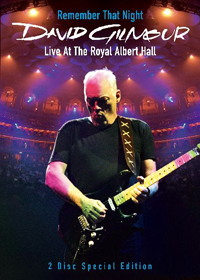
The live show at London's Royal Albert Hall was filmed in High Definition by award-winning director David Mallet for DVD release. Entitled Remember That Night – Live At The Royal Albert Hall, it was released in Europe on Monday 17th September 2007 and the following day in North America, immediately hitting the No. 1 spot in many countries around the globe. Featuring the whole concert on Disc 1 (of the 2-disc set), the second DVD contains bonus material from the Royal Albert Hall shows, and eight other musical tracks including the previously unreleased Island Jam 2007. In addition, there are three documentaries and a photo gallery.

"Now or then, it's still the perfect show" The Sunday Times (UK) was a typical comment from the world's press.

Remember That Night is scheduled for release in the high-definition Blu-ray format in November 2007.

http://www.davidgilmour.com/

sâmbătă, 1 decembrie 2007

Pink Floyd discography


1967
The Piper At The Gates Of Dawn
3.92
(256 ratings)

1968
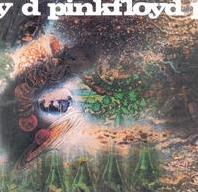
A Saucerful Of Secrets
3.61
(185 ratings)

1969
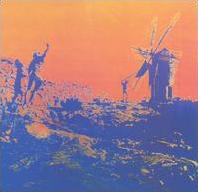
More
3.12
(93 ratings)

1969
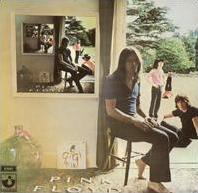
Ummagumma
3.36
(173 ratings)

1970
Atom Heart Mother
3.81
(251 ratings)

1971
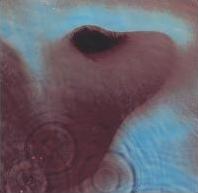
Meddle
4.23
(310 ratings)

1972
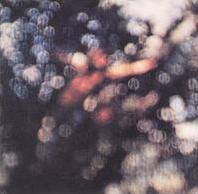
Obscured By Clouds
3.32
(139 ratings)

1973
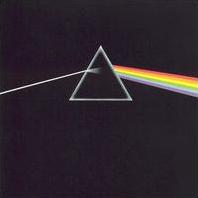
Dark Side Of The Moon
4.57
(640 ratings)

1975
Wish You Were Here
4.67
(548 ratings)

1977
Animals
4.44
(417 ratings)

1979
The Wall
4.05
(378 ratings)

1983
Final Cut, The
3.03
(192 ratings)

1987
A Momentary Lapse Of Reason
3.01
(156 ratings)

1994
Division Bell
3.82
(219 ratings)

Live Albums


1988
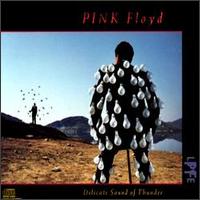
The Delicate Sound Of Thunder
3.08
(42 ratings)

1995
P-U-L-S-E
3.74
(85 ratings)

1999
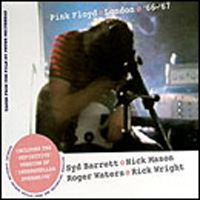
Live 66-67
2.36
(7 ratings)

2000
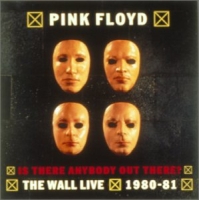
Is There Anybody Out There?
4.17
(55 ratings)

DVD/Videos


1981
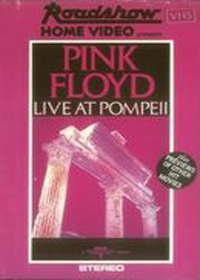
Live At Pompeii
4.64
(8 ratings)

1982
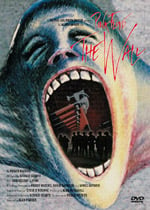
The Wall (The Movie)
3.65
(35 ratings)

1989
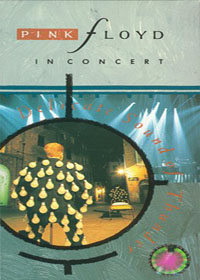
In Concert - Delicate Sound Of Thunder
3.52
(15 ratings)

1992
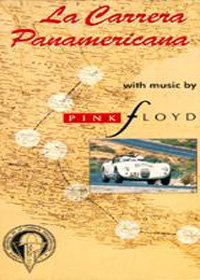
La Carrera Panamericana
2.60
(4 ratings)

1995
P-U-L-S-E
4.37
(35 ratings)

1999
London - Live 66-67
2.49
(10 ratings)

2003
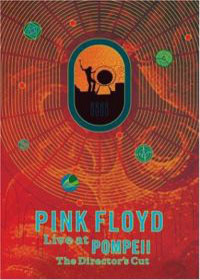
Live At Pompeii
4.39
(103 ratings)

2003
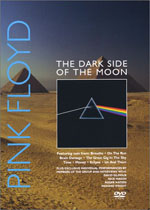
Classic Albums: Dark Side Of The Moon
4.19
(15 ratings)

2003
The Pink Floyd & Syd Barrett Story
3.13
(3 ratings)

2005
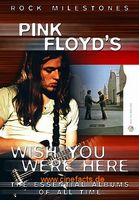
Rock Milestones Pink Floyd's Wish You Were Here
2.00
(2 ratings)

2006
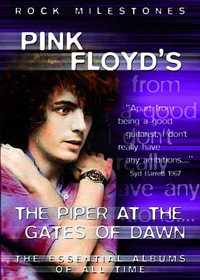
Rock Milestones Pink Floyd's The Piper At The Gates of Dawn
4.00
(1 ratings)

2007
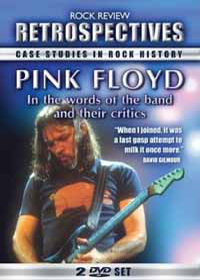
Retrospectives (2-DVD set)
4.00
(1 ratings)

Boxset/Compilations


1970
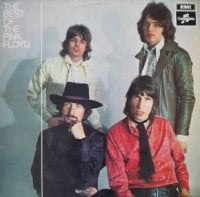
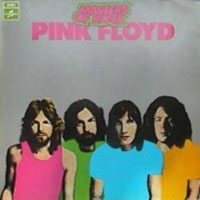
The Best Of The Pink Floyd
1.70
(7 ratings)

1971
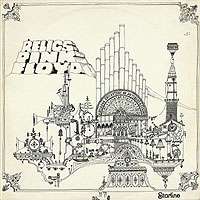
Relics
3.40
(66 ratings)

1973
A Nice Pair
2.95
(11 ratings)

1974
Masters Of Rock Vol. 1
2.50
(6 ratings)

1981
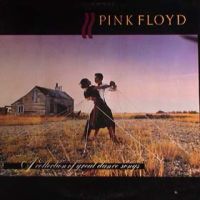
A Collection Of Great Dance Songs
1.97
(38 ratings)

1983
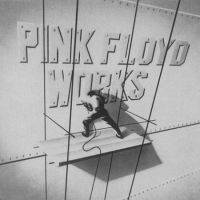
Works
1.91
(27 ratings)

1992
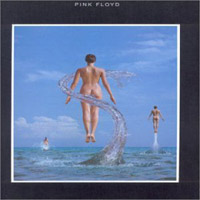
Shine On
3.30
(15 ratings)

1997
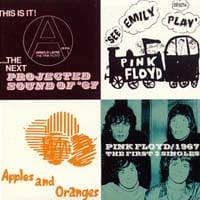
1967: The First Three Singles
3.09
(10 ratings)

2001
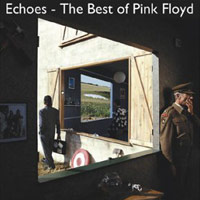
Echoes - The Best Of Pink Floyd
3.21
(53 ratings)

Singles/EPs/Fan Club/Promo


1967
Tonite Let's All Make Love In London
2.51
(32 ratings)

1983
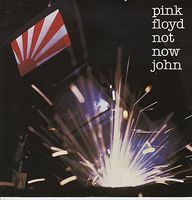
Not Now John/The Hero's Return (Part 2)
2.14
(3 ratings)

1987
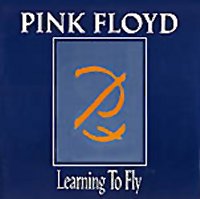
Learning To Fly (promo single)
2.11
(5 ratings)

1994
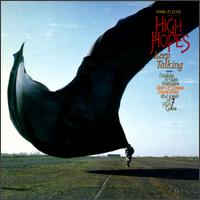
High Hopes/ Keep Talking (single)
2.80
(7 ratings)

1994
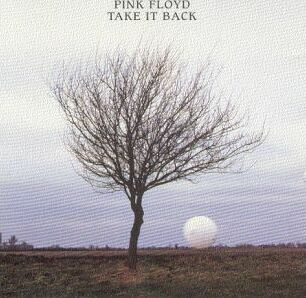
Take It Back (single)
3.30
(9 ratings)

Pink Floyd

Pink Floyd can be considered as one of the leading bands in progressive rock from the seventies, together with YES and GENESIS. Their first line-up consisted of guitarist Syd BARRETT, bassist-singer Roger WATERS (who left the band in 1983), drummer Nick MASON and keyboardist Rick WRIGHT. Their early material was mostly written and sung by BARRETT, at that time the central figure of the group. The first album "The Piper At The Gates Of Dawn" of 1967 contains come catchy pop songs, together with more experimental and longer instrumental pieces. They even reached the Top-20 in England with the song "Arnold LAYNE". In the beginning of 1968, guitarist David GILMOUR joined the band to replace BARRETT in live performances. In 1970 the band recorded some songs for the cult movie Zabriskie Point including an alternative version of 'Careful With That Axe, Eugene'.

PINK FLOYD became even more successful, whilst playing psychedelic progressive rock with a touch of classical music. 1971 saw the release of "Meddle" (a clever mix of short mellow jazzy tunes and lengthy experimentaltracks) and the soundtrack for the film "La Vallée" ("Obscured By Clouds") was released in 1972. But their most successful album was definitely "Dark Side Of The Moon" (1973), cosmic rock produced by an excellent sound engineer Alan PARSONS. This album is a milestone in progressive rock, great songwriting with lots of special effects and including saxophone and great female vocals. The successor "Wish You Were Here" included the well-known epic song "Shine On You Crazy Diamond". "Animals" is a dark and underrated gem, featuring scathing lyrical accounts on humanity.

End 70's, Roger WATERS influenced both musical and lyrical the albums of the band. In 1979, they released "The Wall", a double album rock opera. After the release of "The Final Cut" in 1983 the band split up for a while. PINK FLOYD released a few albums afterwards without Roger WATERS, but they never reached their previous status. "Echoes", The Best of Pink Floyd, was released in 2001. To celebrate this 30th anniversary a new version of "Dark Side Of The Moon" has been released. This release is a must have for all music lovers young and old. Highly Recommended!

TOP 100 2007 Most Popular Music Albums

1 2007 4.16
Excellent addition to any prog music collection
(250 ratings)
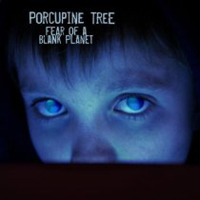
PORCUPINE TREE
Fear Of A Blank Planet
Heavy Prog
(Studio Album)
2 2007 4.25
Excellent addition to any prog music collection
(45 ratings)
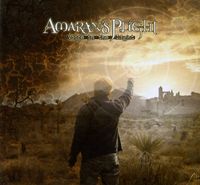
AMARAN'S PLIGHT
Voice in the Light
Progressive Metal
(Studio Album)
3 2007 4.36
Excellent addition to any prog music collection
(25 ratings)
GILMOUR, DAVID
Remember That Night: Live At The Royal Albert Hall
Prog Related
(DVD / Video)
4 2007 4.20
Excellent addition to any prog music collection
(63 ratings)
PHIDEAUX
Doomsday Afternoon
Crossover Prog
(Studio Album)
5 2007 4.28
Excellent addition to any prog music collection
(35 ratings)
BETWEEN THE BURIED AND ME
Colors
Tech/Extreme Prog Metal
(Studio Album)
6 2007 4.19
Excellent addition to any prog music collection
(61 ratings)
GAZPACHO
Night
Crossover Prog
(Studio Album)
7 2007 4.30
Excellent addition to any prog music collection
(28 ratings)
OCEANSIZE
Frames
Psychedelic/Space Rock
(Studio Album)
8 2007 4.18
Excellent addition to any prog music collection
(54 ratings)
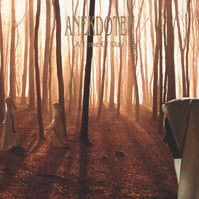
ANEKDOTEN
A Time Of Day
Heavy Prog
(Studio Album)
9 2007 4.28
Excellent addition to any prog music collection
(26 ratings)
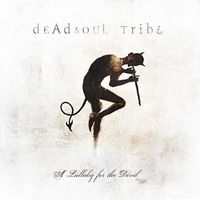
DEADSOUL TRIBE
A Lullaby For The Devil
Experimental/Post Metal
(Studio Album)
10 2007 4.28
Excellent addition to any prog music collection
(24 ratings)
ALAMAAILMAN VASARAT
Maahan
RIO/Avant-Prog
(Studio Album)
11 2007 4.44
Excellent addition to any prog music collection
(14 ratings)
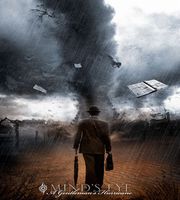
MIND'S EYE
A Gentleman's Hurricane
Progressive Metal
(Studio Album)
12 2007 4.18
Excellent addition to any prog music collection
(34 ratings)
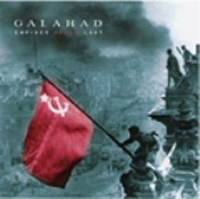
GALAHAD (GBR)
Empires Never Last
Neo Progressive
(Studio Album)
13 2007 4.81
Essential: a masterpiece of progressive music
(7 ratings)
SATELLITE
Into The Night
Neo Progressive
(Studio Album)
14 2007 4.21
Excellent addition to any prog music collection
(27 ratings)
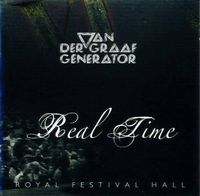
VAN DER GRAAF GENERATOR
Real Time
Eclectic Prog
(Live)
15 2007 4.38
Excellent addition to any prog music collection
(15 ratings)
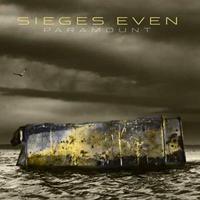
SIEGES EVEN
Paramount
Progressive Metal
(Studio Album)
16 2007 4.07
Excellent addition to any prog music collection
(69 ratings)
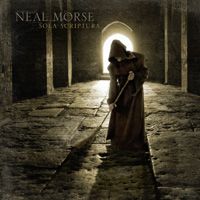
MORSE, NEAL
Sola Scriptura
Symphonic Prog
(Studio Album)
17 2007 4.46
Excellent addition to any prog music collection
(11 ratings)
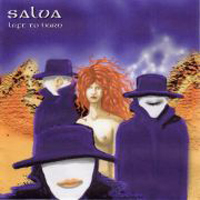
SALVA
Left To Burn
Crossover Prog
(Studio Album)
18 2007 4.26
Excellent addition to any prog music collection
(18 ratings)
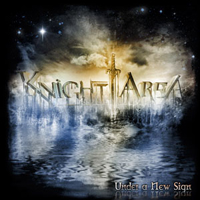
KNIGHT AREA
Under A New Sign
Neo Progressive
(Studio Album)
19 2007 4.02
Excellent addition to any prog music collection
(75 ratings)
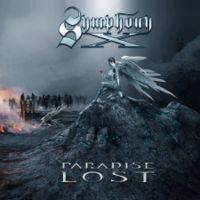
SYMPHONY X
Paradise Lost
Progressive Metal
(Studio Album)
20 2007 4.24
Excellent addition to any prog music collection
(17 ratings)
NEMO
Si Partie II - L'Homme Idéal
Eclectic Prog
(Studio Album)
21 2007 4.57
Essential: a masterpiece of progressive music
(8 ratings)
MAR DE ROBLES
Indígena
Jazz Rock/Fusion
(Studio Album)
22 2007 4.02
Excellent addition to any prog music collection
(49 ratings)
TOWNSEND, DEVIN
Ziltoid the Omniscient
Experimental/Post Metal
(Studio Album)
23 2007 4.59
Essential: a masterpiece of progressive music
(7 ratings)
ZORN, JOHN
Six Litanies For Heliogabalus
RIO/Avant-Prog
(Studio Album)
24 2007 4.02
Excellent addition to any prog music collection
(40 ratings)
FLOWER KINGS, THE
The Sum Of No Evil
Symphonic Prog
(Studio Album)
25 2007 4.01
Excellent addition to any prog music collection
(37 ratings)
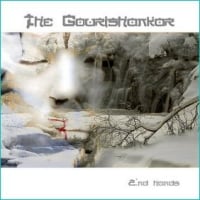
GOURISHANKAR, THE
2nd Hands
Eclectic Prog
(Studio Album)
26 2007 4.16
Excellent addition to any prog music collection
(16 ratings)
FISH
Thirteenth Star
Neo Progressive
(Studio Album)
27 2007 3.93
Excellent addition to any prog music collection
(87 ratings)
PORCUPINE TREE
Nil Recurring
Heavy Prog
(Singles/EPs/Fan Club/Promo)
28 2007 4.02
Excellent addition to any prog music collection
(30 ratings)
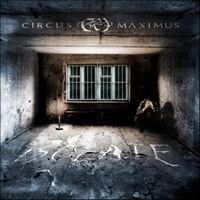
CIRCUS MAXIMUS
Isolate
Progressive Metal
(Studio Album)
29 2007 3.93
Excellent addition to any prog music collection
(74 ratings)
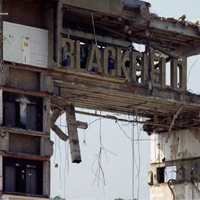
BLACKFIELD
Blackfield II
Prog Related
(Studio Album)
30 2007 4.12
Excellent addition to any prog music collection
(17 ratings)
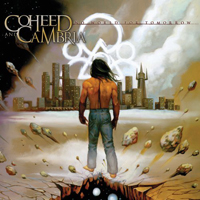
COHEED & CAMBRIA
Good Apollo, I'm Burning Star IV, Volume Two: No World for Tomorrow
Prog Related
(Studio Album)
31 2007 4.40
Excellent addition to any prog music collection
(8 ratings)
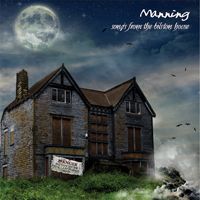
MANNING, GUY
Songs From The Bilston House
Eclectic Prog
(Studio Album)
32 2007 4.27
Excellent addition to any prog music collection
(10 ratings)
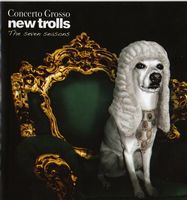
NEW TROLLS
Concerto Grosso, The Seven Seasons
Italian Symphonic Prog
(Studio Album)
33 2007 3.93
Excellent addition to any prog music collection
(55 ratings)
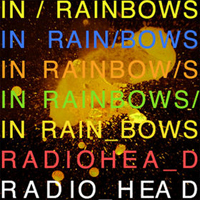
RADIOHEAD
In Rainbows
Crossover Prog
(Studio Album)
34 2007 4.23
Excellent addition to any prog music collection
(11 ratings)
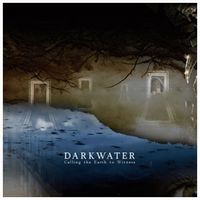
DARKWATER
Calling the Earth to Witness
Progressive Metal
(Studio Album)
35 2007 4.67
Essential: a masterpiece of progressive music
(5 ratings)
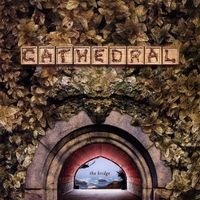
CATHEDRAL (70'S)
The Bridge
Symphonic Prog
(Studio Album)
36 2007 4.30
Excellent addition to any prog music collection
(9 ratings)
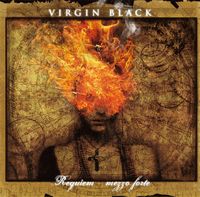
VIRGIN BLACK
Requiem - Mezzo Forte
Experimental/Post Metal
(Studio Album)
37 2007 3.96
Excellent addition to any prog music collection
(36 ratings)
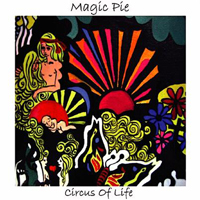
MAGIC PIE
Circus Of Life
Symphonic Prog
(Studio Album)
38 2007 4.29
Excellent addition to any prog music collection
(9 ratings)
CONQUEROR
74 Giorni
Italian Symphonic Prog
(Studio Album)
39 2007 4.50
Excellent addition to any prog music collection
(6 ratings)
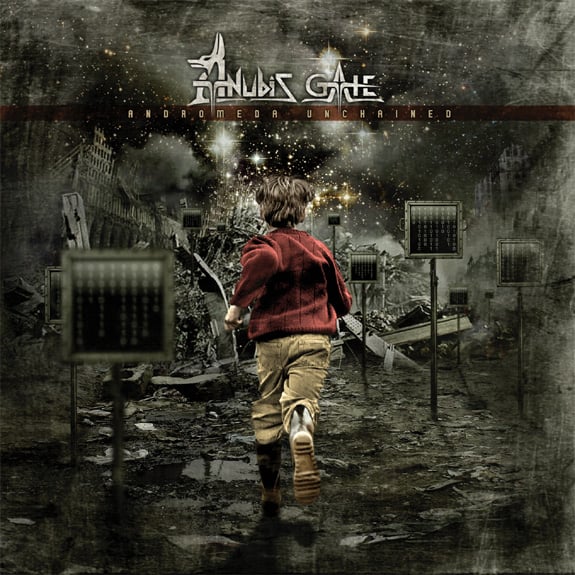
ANUBIS GATE
Andromeda Unchained
Progressive Metal
(Studio Album)
40 2007 4.40
Excellent addition to any prog music collection
(7 ratings)
PINEAPPLE THIEF, (THE)
What We Have Sown
Crossover Prog
(Studio Album)
41 2007 4.00
Excellent addition to any prog music collection
(24 ratings)
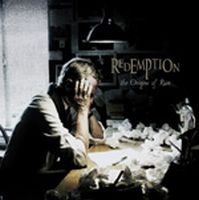
REDEMPTION
The Origins of Ruin
Progressive Metal
(Studio Album)
42 2007 3.95
Excellent addition to any prog music collection
(32 ratings)
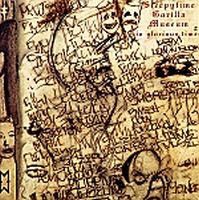
SLEEPYTIME GORILLA MUSEUM
In Glorious Times
RIO/Avant-Prog
(Studio Album)
43 2007 4.47
Excellent addition to any prog music collection
(6 ratings)
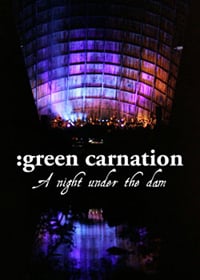
GREEN CARNATION
A Night Under The Dam
Experimental/Post Metal
(DVD / Video)
44 2007 4.38
Excellent addition to any prog music collection
(7 ratings)
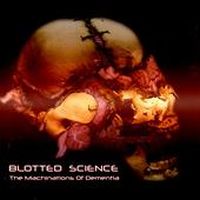
BLOTTED SCIENCE
The Machinations of Dimentia
Tech/Extreme Prog Metal
(Studio Album)
45 2007 4.21
Excellent addition to any prog music collection
(10 ratings)
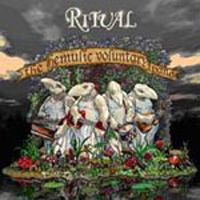
RITUAL
The Hemulic Voluntary Band
Prog Related
(Studio Album)
46 2007 4.25
Excellent addition to any prog music collection
(9 ratings)
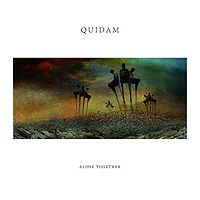
QUIDAM
Alone Together
Neo Progressive
(Studio Album)
47 2007 4.46
Excellent addition to any prog music collection
(6 ratings)
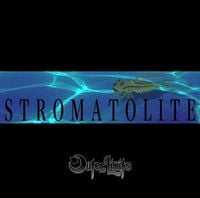
OUTER LIMITS
Stromatolite
Symphonic Prog
(Studio Album)
48 2007 4.29
Excellent addition to any prog music collection
(8 ratings)
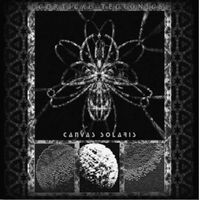
CANVAS SOLARIS
Cortical Tectonics
Tech/Extreme Prog Metal
(Studio Album)
49 2007 4.57
Essential: a masterpiece of progressive music
(5 ratings)
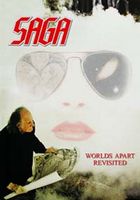
SAGA
Worlds Apart Revisited (DVD)
Prog Related
(DVD / Video)
50 2007 3.98
Excellent addition to any prog music collection
(22 ratings)
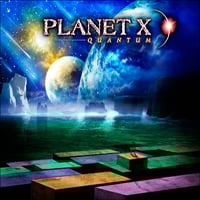
PLANET X
Quantum
Jazz Rock/Fusion
(Studio Album)
51 2007 3.91
Excellent addition to any prog music collection
(35 ratings)
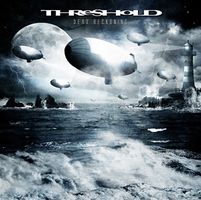
THRESHOLD
Dead Reckoning
Progressive Metal
(Studio Album)
52 2007 5.00
Essential: a masterpiece of progressive music
(3 ratings)
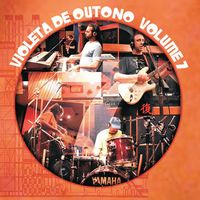
VIOLETA DE OUTONO
Volume 7
Psychedelic/Space Rock
(Studio Album)
53 2007 5.00
Essential: a masterpiece of progressive music
(3 ratings)
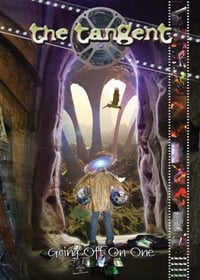
TANGENT, THE
Going Off On One
Eclectic Prog
(DVD / Video)
54 2007 4.08
Excellent addition to any prog music collection
(12 ratings)
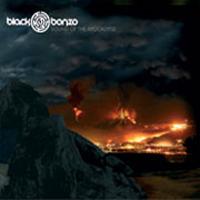
BLACK BONZO
Sound of the Apocalypse
Heavy Prog
(Studio Album)
55 2007 3.95
Excellent addition to any prog music collection
(22 ratings)
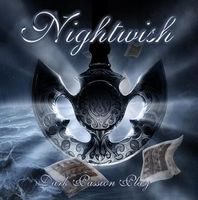
NIGHTWISH
Dark Passion Play
Progressive Metal
(Studio Album)
56 2007 4.23
Excellent addition to any prog music collection
(8 ratings)
GRAYCEON
Grayceon
Experimental/Post Metal
(Studio Album)
57 2007 4.08
Excellent addition to any prog music collection
(11 ratings)
SENOGUL
Senogul
Eclectic Prog
(Studio Album)
58 2007 4.43
Excellent addition to any prog music collection
(5 ratings)
DILLINGER ESCAPE PLAN, THE
Ire Works
Tech/Extreme Prog Metal
(Studio Album)
59 2007 4.17
Excellent addition to any prog music collection
(8 ratings)
SUN CAGED
Artemisia
Progressive Metal
(Studio Album)
60 2007 4.83
Essential: a masterpiece of progressive music
(3 ratings)
BLACKMORE'S NIGHT
Paris Moon
Prog Folk
(DVD / Video)
61 2007 3.91
Excellent addition to any prog music collection
(21 ratings)
APPLE PIE
Crossroad
Neo Progressive
(Studio Album)
62 2007 4.14
Excellent addition to any prog music collection
(8 ratings)
FROMUZ
Audio Diplomacy
Jazz Rock/Fusion
(Live)
63 2007 4.50
Excellent addition to any prog music collection
(4 ratings)
THREE
The End Is Begun
Crossover Prog
(Studio Album)
64 2007 4.50
Excellent addition to any prog music collection
(4 ratings)
ROSETTA
Wake/Lift
Experimental/Post Metal
(Studio Album)
65 2007 3.93
Excellent addition to any prog music collection
(16 ratings)
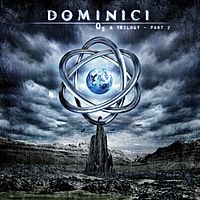
DOMINICI
03 A Trilogy Part 2
Progressive Metal
(Studio Album)
66 2007 4.31
Excellent addition to any prog music collection
(5 ratings)
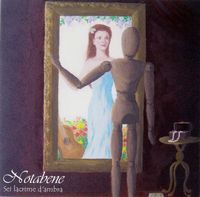
NOTABENE
Sei Lacrime d'Ambra
Italian Symphonic Prog
(Studio Album)
67 2007 4.07
Excellent addition to any prog music collection
(8 ratings)
FLOR DE LOTO
Madre Tierra
Prog Folk
(Studio Album)
68 2007 4.08
Excellent addition to any prog music collection
(7 ratings)
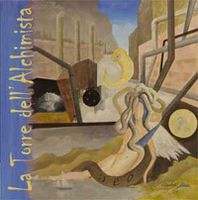
TORRE DELL ALCHIMISTA, LA
Neo
Italian Symphonic Prog
(Studio Album)
69 2007 5.00
Essential: a masterpiece of progressive music
(2 ratings)
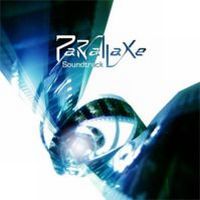
PARALLAXE
Soundtrack
Progressive Metal
(Studio Album)
70 2007 5.00
Essential: a masterpiece of progressive music
(2 ratings)
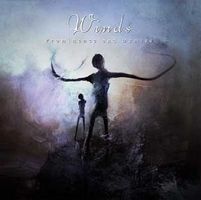
WINDS
Prominence and Demise
Experimental/Post Metal
(Studio Album)
71 2007 5.00
Essential: a masterpiece of progressive music
(2 ratings)
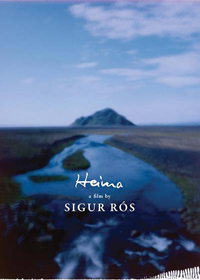
SIGUR RÓS
Heima
Experimental/Post Rock
(DVD / Video)
72 2007 4.33
Excellent addition to any prog music collection
(4 ratings)
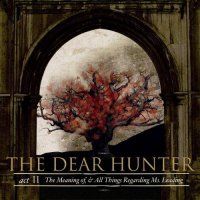
DEAR HUNTER, THE
Act II: The Meaning Of, And All Things Regarding Ms. Leading
Crossover Prog
(Studio Album)
73 2007 4.52
Essential: a masterpiece of progressive music
(3 ratings)
REFUGEE
Live in Concert - Newcastle City Hall 1974
Symphonic Prog
(Live)
74 2007 4.00
Excellent addition to any prog music collection
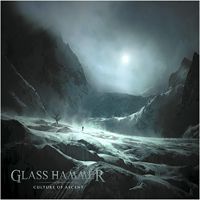
(8 ratings)
GLASS HAMMER
Culture Of Ascent
Symphonic Prog
(Studio Album)
75 2007 3.78
Excellent addition to any prog music collection
(28 ratings)
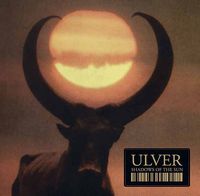
ULVER
Shadows of the Sun
Experimental/Post Rock
(Studio Album)
76 2007 3.84
Excellent addition to any prog music collection
(16 ratings)
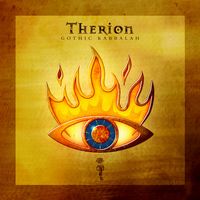
THERION
Gothic Kabbalah
Progressive Metal
(Studio Album)
77 2007 4.09
Excellent addition to any prog music collection
(6 ratings)
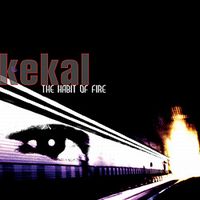
KEKAL
The Habit of Fire
Experimental/Post Metal
(Studio Album)
78 2007 4.48
Excellent addition to any prog music collection
(3 ratings)
KBB
Proof Of Concept
Jazz Rock/Fusion
(Studio Album)
79 2007 4.27
Excellent addition to any prog music collection
(4 ratings)
WYATT, ROBERT
Comicopera
Canterbury Scene
(Studio Album)
80 2007 3.89
Excellent addition to any prog music collection
(11 ratings)
HIDRIA SPACEFOLK
Symetria
Psychedelic/Space Rock
(Studio Album)
81 2007 4.00
Excellent addition to any prog music collection
(7 ratings)
PAGAN'S MIND
God's Equation
Progressive Metal
(Studio Album)
82 2007 3.88
Excellent addition to any prog music collection
(11 ratings)
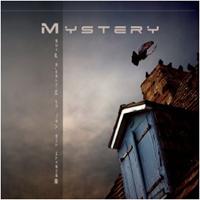
MYSTERY
Beneath the Veil of Winter’s Face
Crossover Prog
(Studio Album)
83 2007 3.82
Excellent addition to any prog music collection
(15 ratings)
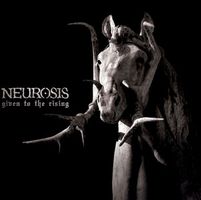
NEUROSIS
Given to the Rising
Experimental/Post Metal
(Studio Album)
84 2007 3.80
Excellent addition to any prog music collection
(15 ratings)
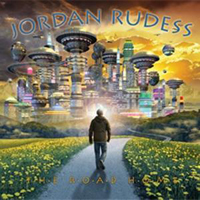
RUDESS, JORDAN
The Road Home
Crossover Prog
(Studio Album)
85 2007 4.09
Excellent addition to any prog music collection
(5 ratings)
PAX CECILIA, THE
Blessed Are The Bonds
Experimental/Post Metal
(Studio Album)
86 2007 4.00
Excellent addition to any prog music collection
(6 ratings)
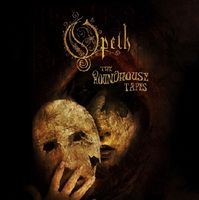
OPETH
The Roundhouse Tapes
Tech/Extreme Prog Metal
(Live)
87 2007 3.67
Excellent addition to any prog music collection
(93 ratings)
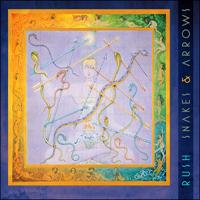
RUSH
Snakes & Arrows
Heavy Prog
(Studio Album)
88 2007 3.81
Excellent addition to any prog music collection
(12 ratings)
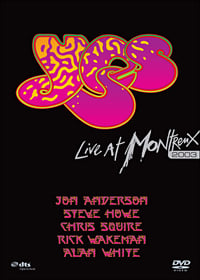
YES
Montreux 2003
Symphonic Prog
(DVD / Video)
89 2007 3.73
Excellent addition to any prog music collection
(22 ratings)
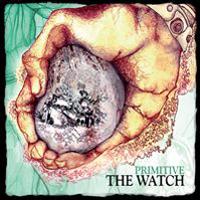
WATCH, THE
Primitive
Neo Progressive
(Studio Album)
90 2007 3.81
Excellent addition to any prog music collection
(11 ratings)
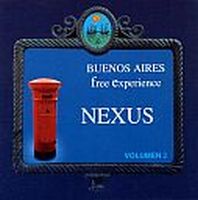
NEXUS
Buenos Aires Free Experience Volumen 2
Neo Progressive
(Studio Album)
91 2007 3.73
Excellent addition to any prog music collection
(20 ratings)
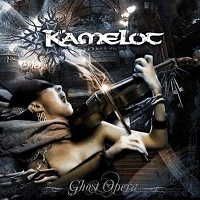
KAMELOT
Ghost Opera
Progressive Metal
(Studio Album)
92 2007 4.00
Excellent addition to any prog music collection
(5 ratings)
DO MAKE SAY THINK
You, You're A History In Rust
Experimental/Post Rock
(Studio Album)
93 2007 4.08
Excellent addition to any prog music collection
(4 ratings)
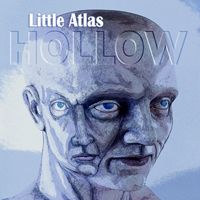
LITTLE ATLAS
Hollow
Symphonic Prog
(Studio Album)
94 2007 4.07
Excellent addition to any prog music collection
(4 ratings)
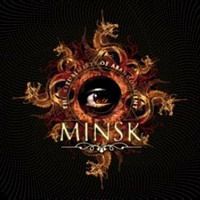
MINSK
The Ritual Fires of Abandonment
Experimental/Post Metal
(Studio Album)
95 2007 4.50
Excellent addition to any prog music collection
(2 ratings)
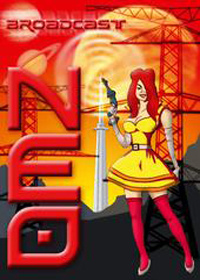
VARIOUS ARTISTS (CONCEPT ALBUMS & THEMED COMPILATIONS)
Neo- Broadcast
Various Genres
(DVD / Video)
96 2007 4.20
Excellent addition to any prog music collection
(3 ratings)
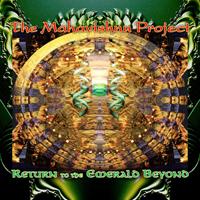
MAHAVISHNU PROJECT
Return To The Emerald Beyond
Jazz Rock/Fusion
(Boxset / Compilation)
97 2007 3.96
Excellent addition to any prog music collection
(5 ratings)
SHINING
Grindstone
RIO/Avant-Prog
(Studio Album)
98 2007 3.89
Excellent addition to any prog music collection
(6 ratings)
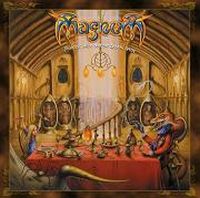
MAGNUM
Princess Alice And The Broken Arrow
Prog Related
(Studio Album)
99 2007 3.94
Excellent addition to any prog music collection
(5 ratings)
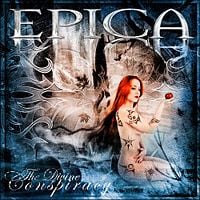
EPICA
The Divine Conspiracy
Progressive Metal
(Studio Album)
100 2007 3.88
Excellent addition to any prog music collection
(6 ratings)
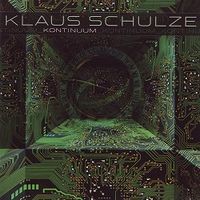
SCHULZE, KLAUS
Kontinuum
Progressive Electronic
(Studio Album)


The history of Progressive Rock Music (1967 - 2004)

About, Contact and Link to ProgArchives.com : The Ultimate Progressive Rock Discography
YOUR ULTIMATE PROGRESSIVE ROCK RESOURCE


PROGRESSIVE ROCK HISTORY
1967 to the PRESENT


From the precursors toward the end of the Sixties until today.
Sub-genres, groups of reference, essential discs for each decade.

What would you think of having a trustworthy companion that would guide you through a journey that discovers the discs you dream about? That’s exactly our goal with ...

Through this "mini guide" of the "progressive music", it is intended that you would discover the kind of music by the means of four chronicles whereby each one covers one wave of the progressive movement. They correspond to this era : end of the Sixties (prehistory), the Seventies (the golden age), the Eighties (the silver age, the birth of neo progressive rock) and at the Nineties at our days (rebirth and new progressive metal).

Research & Redaction in French by...
Ronald Couture (ProgLucky), CANADA
(FOUNDER OF PROGARCHIVES.COM)

SPECIAL THANKS...!

Improved and adapted in English by...
Ian Alterman (Maani), USA (FORUM MODERATOR & SPECIAL COLLABORATOR)

COLLABORATION (coming soon)...

A- INTRODUCTION

The problem of “those words” is back – “progressive music” or “progressive rock” (or “prog,” for close friends – with you to choose! The etymology of those terms has become almost “evil,” creating such a “headache” that it is difficult even to think, much less catalogue this diverting genre of music. But isn’t the “essence” of something specific to each one of us? After all, what good is it to disparage an album if one hasn’t listened to it? With “progressive rock,” one often only enjoys an album after having listened to it several times. Out tympanums are interpreters, but the “spirit” is our only judge.

It would take quite an astute mind to define it clearly. Many such minds have tried, with more or less success. But ultimately each person has his/her own definition. Given human nature, there is nothing surprising about that. And yet even I have not yet offered you a definition…yet. Now I do so with, inevitably, an ounce (or maybe more…) of partiality.
A definition of Progressive Rock

"Progressive rock was largely a European movement, and drew most of its influences from classical music and jazz fusion, in contrast to American rock, which was historically influenced by rhythm & blues and country. Over the years various sub-genres of progressive rock - or prog - have emerged, such as symphonic rock, art rock, neo progressive and progressive metal."

By pushing the research a little further, one realizes that, in general, most definitions of “progressive” share in common such terms as “EVOLUTION,” “PROGRESSION” and “INOVATION,” and include a completely different approach to composition from other rock formats - particularly including a “goodbye” to three-minute compositions constructed of verse-chorus-verse-chorus. One therefore finds new musical structures (pieces from 6 to 20 minutes, with intricate melodies and harmony), new instruments (electric guitars, violin, flute), and various keyboards (mellotron, Hammond B3, synthesizers, piano, ARP, Moog), which combine to create “musical odysseys” that call to mind jazz, musicals, or classical music, the latter of which gives us “symphonic prog.”

With regard to musical structure, “prog” usually offers complex arrangements – often including long, beautiful instrumental sections - and virtuoso musicianship, combining technical mastery and emotional solos. An early example is the 23-minute “Echoes” by PINK FLOYD. Other famous examples include YES’ “Close to the Edge” (18 minutes) and GENESIS’ “Supper’s Ready” (23 minutes). When not “forced” into using “mainstream” structures, the artists have freer reign to integrate their individual and collective cultures and influences – classical, jazz, traditional – into the “energy” of their music.

Listen to a piece in its entirety:
Group: GENESIS
Album: Foxtrot (1972)
Song: Supper’s Ready (22:52)

This “progressive current” – particularly developed in England at the end of the Sixties – moved away from traditional structures of rock and blues roots to explore European music in a broader way. Like any music, “progressive rock” has sub-genres, defined according to the way in which various artists interpreted the new “current.” Ultimately, if one wanted to complicate matters, one could “define” an almost unlimited number of sub-genres. However, without being completely exhaustive, the primary sub-genres are:

Experimental (SOFT MACHINE, KING CRIMSON), psychedelic (PINK FLOYD), theatrical (GENESIS), traditional (EMERSON, LAKE & PALMER), symphonic (YES, CAMEL, GENTLE GIANT), and art rock/pomp prog in the Seventies (SUPERTRAMP). There are also the Canterbury School (CARAVAN, GONG), jazz-fusion (BRAND X, Frank ZAPPA), Italian progressive rock (BANCO DEL MUTUO SOCCORSO, LE ORME, PFM), German progressive current (ELOY - space rock, AMON DUUL II - krautrock); TANGERINE DREAM (progressive electronics), R.I.O. Henry COW) and even zheul (MAGMA). There is even progressive instrumental (Mike OLDFIELD), progressive folk (JETHRO TULL, RENAISSANCE, The STRAWBS), progressive hard prog (RUSH), neo-prog (MARILLION, ARENA, PENDRAGON), and progressive metal (DREAM THEATER, AYREON, PAIN OF SALVATION).

B- PROGRESSIVE ROCK (1967 to the Present)

In this mini-guide to “progressive music,” I hope to get you to discover this genre by means of four “chronicles,” each one covering one “wave” of the “progressive movement.” These four chronicles correspond approximately to: the end of the Sixties (pre-history), the Seventies (the golden age), the Eighties (the money age), and the Nineties to the present (rebirth, and new progressive metal).

For certain groups, one will find a selection of their best albums. The interested reader will also find here some “tools” to dig a little into the history of “progressive rock,” … It is also a question of providing the maximum information at the reader’s fingertips so that, while having profited from the information provided, he can choose to add to that information.
In conclusion, I could never have written this article by myself. I relied heavily on the Web, and a gigantic network and exchange of information regarding “progressive rock,” which makes up the majority of the information provided below. As noted above, after an “eclipse” in the Eighties (progressive rock having had its “glory days” in the Seventies), “progressive rock” has been seeing a formidable rebirth, which I invite you to be part of! If you have not already done so, it is high time to discover this musical universe full of passion and unsuspected richness.
Gradually yours...!

1- PREHISTORY... not yet "prog" but almost! (1967 - 1969)

Pierre Dulieu - Belgique
Ian Alterman - USA
Improved and adapted in English

FRANK ZAPPA
& THE MOTHERS OF INVENTION

Freak Out
- 1966 -
A first complex and disturbed project. With its parodies of pop music, its dissonances,
its avant-gardism, its odd effects, and its unforeseeable arrangements,
Frank Zappa’s “Freak Out” exploded all conventions of popular music.

Although the following are not yet productions of “progressive rock” as that term is used these days, they are nevertheless the first discs of “art rock” – or, if one wants, the first “tests” intended to raise rock music to higher levels of artistic credibility. By experimenting with sound texture, electronics, modern instruments, and new studio techniques, and “importing” sounds and ideas from a variety of global musical sources, these groups “opened up the doors” of rock…for better and for worse – but mostly for better!

The BEATLES
Sergeant Pepper's Lonely Hearts Club Band - 1967
In the line of its predecessor (“Revolver”), the most famous rock album of all time is a starting point that is impossible to circumvent.

The MOODY BLUES
Days of Future Passed - 1967 -
Psychedelic rock is combined with the orchestral arrangements of the London Festival Orchestra to create an unclassifiable work, neither rock nor traditional. Includes the famous “Nights in White Satin.”

PINK FLOYD
The Piper at the Gates of Dawn - 1967
Rock psychedelic on the its best level. "Interstellar Overdrive" is the first true opening in what one will call later Space Rock.

PROCOL HARUM
A Whiter Shade Of Pale - 1967
A fusion of classical, rock and blues. An important album. With Matthew Fisher on organ and Robin Trower on guitar.

CARAVAN
Caravan - 1968
A subtle mixture of jazz and psychedelic rock, this album from the “Canterbury” school is among the first to have given direction to the concept of progressive music.

GILES GILES & FRIPP
The Cheerful Insanity of Giles Giles & Fripp - 1968

Before the famous album "In The Court of The Crimson King", Robert Fripp and the Giles brothers had recorded an insane disc where one finds all and anything but also some first steps of what would be KING CRIMSON later. To listen especially by curiosity.

The NICE
Ars Longa Vita Brevis - 1968
With this second disc in trio, Keith Emerson poses the bases of its vision of the progressive rock: an amalgam of rock and traditional certainly pretentious but which misses neither of ambition nor of plume. To rediscover if you like ELP.

The SOFT MACHINE
Volume Two - 1969
English humor, dissonances, avant-garde, jazz and Robert Wyatt as well. A melting pot in the form of musical chaos perpetually on the fringe.

VAN DER GRAAF GENERATOR (Peter HAMMILL)
The Least We Can Do Is Wave to Each Other - 1969
The dark and very emotional voice of Peter HAMMILL, his stories mystico-scientists and the very personal music of the group constitutes an alloy with share in the history of the progressive music.

At this point, the “stakes” of progressive rock are solid.
The curtain can then fall on the Sixties.
Indeed, one has already entered the Seventies.

2- THE FIRST WAVE (1970 - 1979)
The Golden Age... The Pioneers

Whereas The BEATLES were of “working class hero” status, several musicians of progressive rock came from the middle and lower middle classes. They often had training in classical music, and attended the colleges or universities. They were ready to make rock their own way. Towards the end of the Sixties, English groups wanted to “exceed” the musical format imposed on them by the industry. They wanted to do something different, something that required more than the short 3-minute songs with verses and choruses. Some turned to psychedelic rock, others to the example of The BEATLES, others gave birth to “metal” (BLACK SABBATH). They chose to amalgamate rock, classical, folk, jazz, electronics, contemporary, medieval and other forms. They chose to give up the couplet/refrain structure for the greater freedom of more complex structures. These young musicians wanted to profit – musically – from new techniques, both instrumental and recording.

Jerry Lucky, author of “The Progressive Rock Files,” enumerates some of the elements that mark "progressive rock" :

“Longer songs, changes of tempo, mellotron, use of symphony orchestra,
words like “cosmic” or “philosophical,” etc.

If these are the elements that began the history of progressive rock began, then October 10, 1969 is the date that marks the true beginning of progressive rock, as KING CRIMSON’s “In The Court of the Crimson King” smashed to pieces virtually every standard and norm of rock, in as “monstrous” a fashion as the hallucinogenic face on its cover (which was painted by 23-year-old English artist Barry Godber in 1969; Godber died of a heart attack the following year).

KING CRIMSON’s first album fused psychedelic with symphonic, electronic, experimental jazz, mellotron, new studio techniques, and even bits of metal and folk, to mark the birth of a mature, and extremely aggressive, “progressive rock” sound.

KING CRIMSON

"In The Court Of The Crimson King"
- 1969 -

Around this time, other groups were starting to build unique, sophisticated and inventive “sounds,” including GENESIS (then fronted by Peter Gabriel), CARAVAN, JETHRO TULL, PFM, PINK FLOYD, and SUPERTRAMP. Thirty years later, innumerable “progressive” groups would name these bands when laying claim to the heritage of progressive rock.

What follows are some of the great groups who were part of the enthralling and promising “first wave.” The bands are listed in chronological order of their appearance on the scene: the year noted in parentheses is the year in which their debut album appeared.

[Please note: This is NOT meant to be a complete list of all bands, just an example of some, so don't be offended if I leave your favourite one out!]

The MOODY BLUES - England (1964)

IMITATION... INNOVATION... SENSATION...! The MOODY BLUES began an R&B-influenced rock band in 1964. They consequently respected as one of the most innovative and long lasting groups to emerge during the 1960s. The MOODIES captured the imagination of music fans around the world with the landmark "Days Of Future Passed", one of the earliest « classical rock » records and featured the London Festival Orchestra as musical accompanists. They attempted to create one of the first concept like recordings ever having written songs which attempt to reflect the mood of a passing day. In my mind this album works as well as "Sgt Pepper" and early FLOYD offerings. This recording is a true classic and is essential in all good collections…

During the years 1967 – 1974, they recorded seven very successfull albums, all of which went gold with releases like "On The Threshold Of A Dream" and "Question Of Balance". In the ‘70s, their music from this period was ambitious and pastoral and philosophical, featuring songwriting contributions from all five members (Graham Edge – drummer, Mike Pinder – keyboards, Ray Thomas – guitars, John Lodge – bass guitar, Justin Hayward – guitar). Hibernation of a sort followed in the mid ‘70s, as each member of the band released solo albums (Hayward and Lodge had the most success with their effort, BLUE JAYS).

The band regrouped in the '80s and picked up where they left off (commercially anyway) with "Long Distance Voyager". Though the ‘90s found the MOODIES less of a commercial force than a cult band, the group still tours and releases albums on occasion (including 1999’s "Strange Time ").

TOP CDs:
Days of Future Passed (1967) / In Search of the Lost Chord (1968) / On The Threshold Of A Dream (1969) / To Our Children's Children's Children (1970) / A Question Of Balance (1970) / Every Good Boy Deserves Favour (1971) / Seventh Sojourn (1972)

PINK FLOYD - England (1967)

PINK FLOYD is not simply one of the progenitors of progressive rock, but is probably the most popular group in the entire genre. Chosen by original founder/lyricist Syd Barrett, the name refers to the first names of two bluesmen: PINK Anderson and FLOYD Council, and the joining of the two names is translated into English as “Pink Flamingo.” The band originally formed in the mid-1960s during the “psychedelic” rock period, but then helped to develop what we now know as “progressive rock” – and particularly “space rock”- through the use of sound textures, effects, and emerging recording studio tricks and techniques. Personally, I have always believed that PINK FLOYD is an overrated group. They have some good albums, but also some very average albums. For me, PINK FLOYD is not as good as GENESIS or YES, yet they are undoubtedly more popular, better recognized, and more respected by the masses and critics.

TOP CDs:
Dark Side Of The Moon (1973) / Wish You Were Here (1975) / Animals (1977) / The Wall (1979)

JETHRO TULL - England (1968)

Although JETHRO TULL is comprised of excellent musicians, it is primarily the creation and representation of its singer, lyricist and flutist, Ian ANDERSON. Indeed, Ian ANDERSON’s flute playing is one of the most characteristic elements of the group. The music is a mixture of folk, medieval, blues, jazz, rock, traditional, and almost everything else. With 60 million albums sold, and more than 250 concerts played in 40 countries each year, JETHRO TULL continues to record and perform. It is one of the “dinosaurs” of progressive rock, and one of its most beloved groups.

TOP CDs:
Aqualung (1971) / Thick As A Brick (1972) / Heavy Horses (1978)

CARAVAN - England (1968)

A reference in the triumphal years of English Progressive rock, CARAVAN grew out of the breakup of The WILDE FLOWERS, a Canterbury-based group formed in 1964 as an R&B-based outfit with a jazzy-edge. In the wake of the earlier group’s dissolution, Pye Hastings (guitar & vocals), Richard Sinclair (bass & vocals), David Sinclair (keyboards), and Richard Coughlan (drums) formed CARAVAN in January of 1968. Their music etablished the mix of humor and progressive sounds (with warmful and pleasant vocal parts, long instrumental flight: guitar, organ sounds, and piano work, etc.), taking its roots from classical music through jazz and traditional English influences. CARAVAN is still active today, playing many live dates in Britain and Holland. The year 2000 saw the beginning of renewed activity (festival, concert, etc.). 2002 also saw the band play their first performance in the United States in 28 years at NEARfest 2002.

TOP CDs:
If I Could Do It All Over Again, I'd Do It All Over You (1970) / In The Land Of Grey And Pink (1971) / For Girls Who Grow Plump In The Night (1973)

KING CRIMSON - England (1969)

Many people mark the beginning of progressive rock in 1969 with the first album by KING CRIMSON. As noted, however, the “germs” of prog were present since at least 1967. The BEATLES, PINK FLOYD, MOODY BLUES and PROCOL HARUM had “prepared” the way between 1967 and 1969. In 1969, a young English group, only together for a few months, gave us the album “In the Court of the Crimson King” (1969). The music had a dark, majestic, sometimes chaotic quality. Founded by guitarist Robert Fripp, the group underwent many personnel changes over the years. Some of the notable musicians who played with the group at one time or another include Greg Lake, Bill Bruford, John Wetton, Adrian Belew and Tony Levin. On the side, Fripp entered into numerous collaborations, including with Brian Eno, Peter Gabriel and David Bowie, in addition to leaving several solo albums.

TOP CDs:
In The Court Of The Crimson King (1969) / In The Wake Of Poseidon (1970) / Lizard (1970)

GENESIS - England (1969)

Before changing itself into a “pop-rock” group in the early to mid-1980s, GENESIS was one of the most highly beloved, even “worshipped” progressive bands. The group entered its “golden age” in 1971, when drummer Phil Collins and guitarist Steve HACKETT joined founders Peter GABRIEL (vocals, lyrics), Tony BANKS (keyboards) and Mike RUTHERFORD (bass). The music of the group became highly melodic and theatrical, propelled primarily by Peter GABRIEL’s unique lyrics and theatrics, and Tony BANKs’ keyboards, particularly the heavy use of mellotron. GENESIS was arguably one of the two or three most influential progressive rock groups, and that influence is likely to be felt for a long time.

TOP CDs:
Nursery Cryme (1971) / Foxtrot (1972) / Selling England By The Pound (1973) / The Lamb Lies Down On Broadway (1974)

VAN DER GRAAF GENERATOR - England (1969)

I am far from being an expert on this group. However, it would be difficult to omit them if only for their album “Pawn Hearts,” which I know well. VDGG is not the best-known of groups, but “Pawn Hearts” is not only worth listening to but also historically significant. Peter HAMMILL, singer and lyricist of the group, has a unique voice, one which was an influence for several later prog vocalists. His lyrics border the depth of literature, while his music, epic in nature, benefited from the band’s original arrangements. “Pawn Hearts” also features piano, keyboards and saxophone, as well as guitar work from KING CRIMSON founder Robert FRIPP. Their sound (already unique because driven by saxophone and keyboards, guitars and drums) cannot be easily related to the archetypes of folk, blues, rock or jazz, despite the fact that it contains elements of all.

TOP CDs:
H to He, Who Am the Only One (1970) / Pawn Hearts (1971) / Godbluff (1975) / Still Life (1976)

YES - England (1969)

Along with GENESIS, YES is another of the two or three most influential progressive bands. The “golden age” of YES began in 1971 (around the same time as that of GENESIS), with the line-up of Jon ANDERSON (vocals, lyrics), Chris SQUIRE (bass), Steve HOWE (guitar), Bill BRUFORD (drums) and Tony Kaye (keyboards). However, it was not until Tony Kaye was replaced by keyboardist extraordinaire Rick WAKEMAN in 1972 that YES reached its peak. At that point, YES was comprised of perhaps the most versatile, virtuoso musicians in the history of progressive rock.

TOP CDs:
The Yes Album (1971) / Fragile (1972) / Close To The Edge (1972)

The STRAWBS - England (1969)

This well-known group’s Progressive rock of the early ‘70s, The STRAWBS differed from their more successful compatriots – The MOODY BLUES, KING CRIMSON, PINK FLOYD. Their sound originated to a more traditional British folk style blended with enough rock to form their unique style,. They have recorded over 15 albums through the years, with various line ups around the core of Dave Cousins, who is the main driving force in the band and main songwriter. He has also released a couple of excellent solo albums. The STRAWBS most interesting period began with “Grave New World”, and ended “Ghosts”, the best probably being “Bursting At The Seams”. They were also known as the first band to feature the keyboard playing of Rick WAKEMAN. You can be from now on heard and seen on “Classic Rock Legends”, a DVD from the eponymous label.

TOP CDs:
From The Witchwood (1971) / Grave New World (1972) / Hero And Heroine (1974) / Ghosts (1975)

LE ORME - Italy (1969)

Italy produced several excellent progressive rock groups during the 1970s, and then again in the 1990s. LE ORME is one of the oldest and best known. Created by bass player Aldo Tagiapietra, keyboardist Toni Pagliuca and drummer Mike Dei Rossi, the band reminds of Seventies groups built upon keyboards parts (RARE BIRD, THE NICE, ATOMIC ROOSTER…) and even BANCO DEL MUTUO SOCCORSO due to the Italian vocals. The group stayed together during the 1970's, by which time they'd evolved into an EMERSON, LAKE & PALMER-type progressive rock band, cutting four albums in that vein.

Re-formed as a quartet (keyboards-sitar, bass, keyboards and drums) and with a guest guitarist for “Il Fiume”, LE ORME goes back to what they do best: same elaborated symphonicism with a classical touch, same enhanced lyricism and same developments of complex, delicate themes with loads of breaks, dreamy or nostalgic ambiences. The group still records, and recently released “Elementi” (2001) and “L’Infinito” (2004). As for “Elementi” (2001), it proves to be one of the best albums by Le ORME ever!!!

TOP CDs:
Felona & Serona (1973) / Contrapunti (1974) / Elementi (2001)

RENAISSANCE - England (1969)

Rising from the ashes of The YARDBIRDS (the group which also spawned LED ZEPPELIN) in 1969, the band went though several membership changes, with Keith Relf and his sister Jane (who later fronted the very RENAISSANCE-like ILLUSION) existing and McCarty all but gone after 1971. In this incarnation they recorded two albums but never quite made it, despite some success on England’s campus circuit. The new lineup formed around the core of guitarist Michael Dunford, bassist Jon Camp, keyboardist John Tout, and Terry Sullivan on drums, with classically-trained vocalist Annie Haslam (an aspiring singer with opratic training and a three-octave range) and lyrics by poetess Betty Thatcher, fused classical and rock formats to make some of the most beautiful and touching songs in the prog-rock/folk genre. By the late 70s progressive folk-rock was a dying breed and the band found the music world around them evolving into the punk and new wave booms.

TOP CDs:
Ashes Are Burning (1973) / Turn Of Cards (1974) / Scheherezade And Other Stories (1975) / A Song For All Seasons (1978)

EMERSON, LAKE & PALMER - England (1970)

EMERSON, LAKE & PALMER qualifies as a “super-group”; a band comprised of musicians who were initially known as members of prior bands. Keyboardist Keith Emerson was a member of the group THE NICE, which was known for its fantastic scenic performances. Greg Lake was the original bass player and vocalist for KING CRIMSON, after which he met Emerson and they explored the idea of creating a new group. Carl Palmer was the drummer for several groups, most notably ATOMIC ROOSTER. The music of EMERSON, LAKE & PALMER is heavily influenced by classical music; indeed, in addition to its original compositions, the band interpreted and arranged many classical masterpieces for progressive rock instrumentation. The sound of the “Moog” synthesizer – of which Emerson was one of the pioneers – is one of the major components of the group’s sound. The band was also know for its theatrics, including Emerson stabbing his Hammond organ.

TOP CDs:
Emerson, Lake & Palmer (1970) / Tarkus (1971) / Trilogy (1972) / Brian Salad Surgery (1973)

GENTLE GIANT - England (1970)

A unique group, extremely under-appreciated even by many progressive rock fans. The music of GENTLE GIANT is a very complex mixture of traditional rock and “medieval” style music, with bits of classical, jazz and folk, and often features intricate, extremely complicated instrumental and vocal arrangements which can frighten many neophytes.

TOP CDs:
Gentle Giant (1970) / Three Friends (1972) / The Power And Glory (1974) / Free Hand (1975)

HAWKWIND - England (1970)

Over their 30-odd year history, HAWKWIND were probably the most famous underground rock band in the world. The group was formed in the late '60s by guitarist/singer Dave BROCK, guitarist Mick SLATTERY and saxman/flautist/singer Nik TURNER. Dave BROCK was the leader of HAWKWIND and he was the captain, as it were. The band never would have made it for 30 years without Dave.

HAWKWIND's history has been marked by a series of confusing line-ups through 40 or so personnel changes. Their sound has continued to metamorphose and evolve: an almost jazz feel ("Hawkwind"), the "experimental" & acoustic sounds of early releases ("In Search Of Space"), changing to the metal sound of their days (mid 70's), and a modern electronic feel on the latest ("Electric Teepee"). Yes, one can detect definite evolutions. With the primary use of the synthesizer, heavy and delay with the touch of techno, HAWKWIND practically created a genre of music that be called: psychedelic space-rock. Their creativity seems to be in the use of the synths to add to the intense moods of their songs. They were the master of the acid-space rock genre.

TOP CDs:
In Search Of Space (1971) / Hall Of The Mountain Grill (1974) / Warrior On The Edge Of Time (1975) / Leviation (1980)

SUPERTRAMP - England (1970)

A variant of progressive rock that some have called sophisto-rock. SUPERTRAMP is a sophisticated pop band that was able to continuously turn out very good songs as "Crime Of The Century" & "Dreamer". They were unique and derivative and exciting and fun. Those first couple of albums were a nice escape from the sometimes passionless ness of prog rock. Their music has been described as whimsy, lighthearted, fluff and a million other variations on this theme. Other thing is that they also have the ability to inject some humor into their music now and then. With over 18 million copies to date, "Breakfast In America" is one ot the greatest melodic pop/rock albums of the seventies. After that album, SUPERTRAMP continued to develop a more R&B-flavored style.

TOP CDs:
Crime Of The Century (1974) / Crisis? What Crisis? (1975) / Even In The Quietest Moments.... (1977) / Breakfast In America (1979)

ELOY - Germany (1971)

A GROUP TO TRAVEL IN TIME - A PAST VERY PRESENT.
ELOY has the history to claim a place at the top of the progressive and “Germanic” hierarchy (which is a somewhat confused period). The longevity of ELOY we owe to guitarist Franck Bonermann, the man with the beret who has orchestrated the destiny of ELOY since 1971. Any doubts about the continued viability of the band were dispelled by the release of the marvelous “Ocean 2” (1998). On it, past and present were joined together in a marriage of top-notch symphonic and echo-electronic, paving a new future, and perhaps leading to a renewed success. ELOY can be considered to the land of Goethe what PFM, LE ORME or BANCO are to Italy.

TOP CDs:
Dawn (1976) / Ocean (1977) / Silent Cries And Mighty Echoes (1979) / Ocean 2 (1998)

PREMIATA FORNERIA MARCONI (PFM) - Italy (1972)

PFM is without any doubt the best-known Italian progressive rock group. Their music is influenced by GENESIS and ELP, and is enriched by the use of violin, which creates something of a “signature” sound. In an effort to reach more people (particularly the English-speaking British and Americans), the group was persuaded to “remake” two of the albums of 1972, with English lyrics and vocals. Pete Sinfield (lyricist for KING CRIMSON, among others) was given the responsibility of writing, rather than translating, lyrics for “Photos of Ghosts.” From the musical point of view, some of the arrangements are different than the original Italian release. I prefer the Italian versions of the songs. These albums are available in a remastered box version through BMG Italy at a reasonable price.

TOP CDs:
Storia Di Un Minuto (1972) / Per Un Amico (1972) / Photo's Of Ghosts (1973)

BANCO DEL MUTUO SOCCORSO (BDMS) - Italy (1972)

Often compared with EMERSON, LAKE & PALMER, or GENESIS in their better period, BANCO were undoubtedly the greatest of all the Italian progressive rock bands in the mid 70s. Their sound was influenced by folk themes, classical music, and the melodic experimental British bands of the time, i.e. early GENESIS, the NICE, and others. The first three BANCO releases are definitely classics, with a strong baroque feel, dual keyboards tapestry of the brothers Nocenzi, extremely complicated arrangements, and a strong vocal presence. BANCO is a model of sophisticated rock, still playing in the 2000's with the same enthusiasm they had thirty years before. ESSENTIAL to any serious progressive rock collection.

TOP CDs:
Banco Del Mutuo Soccorso (1972) / Darwin (1972) / Io Sono Nato Libero (1973) / Banco (1975)

CAMEL - England (1973)

If JETHRO TULL is the embodiment of Ian ANDERSON, then CAMEL is the embodiment of guitarist Andy Latimer. The group’s music is heavily jazz-influenced, and comprises long, melodic instrumental flights. CAMEL is one of the “headline” groups of progressive rock, and is more or less affiliated with the “Canterbury” school of prog. Clearly influenced by this style when they started (Early Seventies), the band followed the path of CARAVAN, before developing its own personality. The group continues to record, with a new keyboardist and a French-Canadian drummer.

TOP CDs:
Mirage (1974) / The Snow Goose (1975) / Dust And Dreams (1991) / Harbour Of Tears (1996)

RUSH - Canada (1974)

RUSH is a Canadian “power trio” formed in the mid-1970s. RUSH’s discography is one in which albums are done in cycles of three, in which the group develops a different style and approach for each one. This began with “Caress of Steel” (1975) and “2112” (1976), with which the group’s career took off. However, it was the release of the third album in this cycle - “A Farewell to Kings” (1977) – that showed the band’s increasingly progressive approach. But the best was yet to come. With “Hemispheres” (1978), RUSH found enormous worldwide success, and became a progressive band to be reckoned with.

TOP CDs:
2212 (1976) / A Farewell To Kings (1977) / Hemispheres (1978)

To follow... THE SECOND WAVE (1980 to 1989)

The END OF the FIRST WAVE
You will undoubtedly note that all of the groups listed above as “first wave” appeared prior to 1975. Like all new “fashions,” progressive rock was largely abandoned in favor of a new “flavor of the month,” in this case “punk rock.” It was part of a natural cycle of change, in that progressive rock groups became commercially “excessive”: they started making increasingly ambitious albums, which were in many cases less “listenable” to the general public. In addition, the egos of the musicians sometimes became a factor, and fans wearied of this. From 1975 on, progressive rock went into a steep decline, which made it all but disappear for several years. Indeed, not only did it decline, but it was actively disavowed and discredited by many in the professional music scene. However, progressive rock was vindicated when its virtuosity, complexity and imagination overrode the mediocrity, simplicity and “harsh reality” of “punk.” At the beginning of the Eighties, some veteran and many new musicians created a second wave of progressive rock that continues in one form or another to this day.

3- SECOND WAVE (1980 - 1989)
The Silver Age (neo-progressive or the prog of the new wave)

The late Sixties and early to mid Seventies saw the birth and golden age of progressive rock, but also its ultimate rejection, denigration and “exclusion.” Yet in spite of the “punk” tidal wave of 1977, certain progressive rock groups persisted in producing prog rock “in the shade”: in a marginalized fashion. Other groups (GENESIS, YES) changed their “sound” in order to remain “current” (i.e., “commercial,” though not always “bad”), and in doing so ended up with even more success than they achieved during their early years. Certain veteran musicians of the progressive scene even created new “supergroups” (ASIA) incorporating both progressive and more “commercial” elements. Others, like KING CRIMSON, continued to make strictly “progressive” music, but leaving aside some of the more “symphonic” elements. This decade also saw the considerable influence of RUSH, which had successfully merged progressive and commercial elements to become a true super group.

Despite the rejection of progressive music by the critics (and by much of the public), at the beginning of the Eighties some young musicians seemed eager to “buck the tide” and create truly progressive music. Among these new groups, only MARILLION, IQ and PENDRAGON saw any real measure of success. However, along with the success of YES’ “Drama” in 1980, although the “second wave” of progressive music was short, it proved that progressive music had not died, and that there was indeed an audience out there that wanted it.

Neo-Progressive or the new progressive wave:
If the definition of “progressive rock” remains vague and unfinished, the definition of neo-progressive is as much if not more so, particularly because the very term is used in various ways. Some use the term “neo-progressive” to describe the music of the groups of the “second wave” – “neo-progressive” being used here to denote the direction of the “new progressive wave.” This use can certainly be defended. After all, although strongly inspired (and often influenced) by the pioneers of progressive rock, the music of the “neo-progressive” groups has clear differences. Still, some consider this use of the term “neo-progressive” to be “belittling,” even pejorative. Some believe that only progressive rock produced in the Seventies is worthy of the appellation “progressive.” I believe this to be not only narrow - distorting what makes “progressive” rock progressive – but also divisive. Indeed, some of these people use the term “neo-progressive” to disparage the music of later progressive groups whom they do not like.

Here are some of the new groups who made progressive rock in the Eighties, and who deserve serious attention. The bands are listed in chronological order of their appearance on the scene: the year noted in parentheses is the year in which their debut album appeared.

[Please note: This is NOT meant to be a complete list of all bands, just an example of some, so don't be offended if I leave your favourite one out!]

RUSH - Canada (1974)

Although they had already established themselves as a progressive group to be reckoned with in the Seventies, beginning in 1980 power trio RUSH released three significant albums that showed a significant evolution in their style (“Permanent Waves,” “Moving Pictures,” “Signals”), from a “stricter” progressive style to a more “commercial,” yet still clearly progressive, sound. In this way, RUSH essentially “re-invented” itself for the Eighties as a neo-progressive group, maintaining its effectiveness as a “progressive” group, while at the same time making its approach more “concise” and “available.” As an aside, RUSH’s album covers during this period were designed by the excellent Hugh SYME.

TOP CDs:
Permanent Waves (1980) / Moving Pictures (1981) / Signals (1982)

To follow... THE THIRD WAVE (1990 to the PRESENT)

MARILLION - England (1982)

Originally founded by drummer Mick Pointed as SILMARILLION in 1978, guitarist Steve Rothery joined in 1979, and vocalist/lyricist Fish joined in 1980, renaming the band MARILLION. The group wrote material and played live for a full two years – testing its material - prior to releasing its first studio album in 1982. Although clearly “progressive” in its use of various progressive elements, the music was more “accessible” than “strict” prog. In this regard, the term “neo-progressive” could arguably first be applied to MARILLION. The band’s strongest influence is GENESIS, and many neophytes considered MARILLION a “clone” of GENESIS. At first listening, Fish does approach his vocals in a style similar to Peter Gabriel. However, his voice is more “muscular.” Mick Pointer left the group after the first album (and would later help found ARENA during the “third wave” of the Nineties), and was replaced by Ian Moseley. In 1988, Fish left the group (after four studio albums), and was replaced by Steve Hogarth. Since the departure of Fish, the group’s sound has changed, and the group has both lost old fans and gained new ones as a result.

TOP CDs:
Script for a Jester’s Tear (1983) / Fugazi (1984) / Misplaced Childhood (1985) / Brave (1994) / Marbles (2004)

IQ - England (1983)

After MARILLION, IQ is the group that achieved the most success during the “second wave,” but this success was admittedly more modest. Like other groups of the “second wave,” IQ was initially known for its spectacular performances. The group’s first studio album was released in 1983, and presented a clearly “neo” sound, with influences including GENESIS. The original vocalist of IQ, Peter Nichols, left in 1985, but returned in 1993 with the album “Ever,” which proved that the group was ready to take its rightful place in the “third wave” as well.

TOP CDs:
Tales From The Lush Attic (1983) / The Wake (1985) / Ever (1993) / Subterranea (1997) / Dark Matter (2004)

PENDRAGON - England (1984)

Founded in 1981, PENDRAGON released its first album in 1984 with musicians Nick Barret (vocals/guitar), Peter Gee (bass), Fudge Smith (drums) and Cleaves Nolan (keyboards). And although the group saw some minor success during the “second wave,” it was not until the beginning of the Nineties, during the “third wave,” that the group really made its name. The music of PENDRAGON is easily recognizable: long instrumental sections, often with a “majestic” (and, to some detractors, pompous) sound. The group’s major influenced are GENESIS and PINK FLOYD.

TOP CDs:
The Jewel (1985) / The World (1991) / Window of life (1993) / The Masquerade Overture (1996)

The END of the SECOND WAVE
The Eighties were not a happy decade for the new creators of progressive rock. Some of the pioneers of progressive rock, and a handful of neo-progressive groups, survived the storm, but often at the price of significant changes in personnel and/or, far more significantly, modifying their style in order to please the public. Yet certain neo-progressive groups would create their major works in Nineties, and even into the new millennium. Two examples are PENDRAGON, whose major work, “Masquerade Overture,” appeared in 1996, and IQ, whose “Dark Matter” appeared in 2004.

Now let’s see how the “re-birth” of progressive rock – the “third wave” - came from perhaps the most unlikely of places: metal rock.

4- THE THIRD WAVE (1990 - The Present)
Hard Re-birth... Then Gaining!
New "Progressive Metal": Resurgence, or Revival?

1. RE-BIRTH…HARD, THEN GAINING!
In the Nineties and through the present, the progressive spirit returned again. Part of it came from groups who had begun in the “second wave,” but did not truly “find their feet” until the “third wave.” For the most part, these groups (including PENDRAGON and IQ) were influenced by some of the “pioneer” bands of the late Sixties and early Seventies, particularly GENESIS and PINK FLOYD.

Another part of the progressive “revival” of the Nineties came from new groups whose influences also came from some of the pioneer groups (including GENESIS, PINK FLOYD, ELP and GENTLE GIANT). Chief among these new groups were PORCUPINE TREE, ARENA, FLOWER KINGS and SPOCK’S BEARD.

Here are some of the new groups who were part of the “rebirth” of progressive rock in the Nineties, and who deserve serious attention. The bands are listed in chronological order of their appearance on the scene: the year noted in parentheses is the year in which their debut album appeared.

[Please note: This is NOT meant to be a complete list of all bands, just an example of some, so don't be offended if I leave your favourite one out!]

PORCUPINE TREE - England (1989)

Unique among the “third wave” progressive bands, PORCUPINE TREE (PT) was created to satisfy interest about the “legendary Porcupine Tree,” which started as a solo project of singer/guitarist Steve Wilson, who worked as both musician and engineer on various projects. He also performed with NO-MAN (with singer Tim Bowness), BASS COMMUNION, and I.E.M., as well as making contributions to MARILLION, FISH, CIPHER and OPETH. Recently, he formed a duo project, BLACKFIELD, with Israeli singer Aviv Geffen. Embracing and exploring prog rock elements, PT has created some noteworthy albums over the years, continuing full-strength into the new millennium. Its stylistic changes through the years reflect how Wilson positioned PT relative to other projects. In essence, PORCUPINE TREE is a blend of PINK FLOYD, RADIOHEAD (old), GENESIS, KING CRIMSON and ELP. In my opinion, PORCUPINE TREE’s music is absolutely essential prog.

TOP CDs:
The Sky Moves Sideways (1995) / Stupid Dream (1999) / Lightbulb Sun (2000) / In Absentia (2002) / Deadwing (2005)

The FLOWER KINGS - Sweden (1995)

Formed in 1993 by veteran singer/guitarist/composer Roine Stolt (ex-KAIPA), FLOWER KINGS has gone on to become not only one of the most prolific studio recording bands in any genre, but one of the leaders of the current symphonic rock movement. In ten years, they have released an album almost every year, sometimes including double-CDs with extended playing times. FLOWER KINGS’ music is perhaps best described as “symphonic” (i.e., influence from YES and GENESIS), but with some “jazz” overtones (influence from CAMEL). Roine Stolt is the primary composer for FLOWER KINGS, with some contributions by keyboardist Tomas Bodin. Good “starting points” for listeners would be “Back in the World of Adventures,” “Retropolis” or “Space Revolver.” Keeping himself busy with numerous jaunts around the world, Roine Stolt recorded two albums with new “supergroup” TRANSATLANTIC (2000 and 2001), which features bassist Pete Trewavas (MARILLION), keyboardist Neal Morse (SPOCK’S BEARD) and drummer Mike Portnoy (DREAM THEATER).

TOP CDs:
Back In The World Of Adventures (1995) / Retropolis (1996) / Flower Power (1998) / Space Revolver (2000)

ARENA - England (1995)

One of the dominant neo-progressive groups of the Nineties, ARENA features former members of MARILLION (drummer Mick Pointer) and PENDRAGON (keyboardist Clive Nolan). Despite being plagued by virtually constant personnel changes, ARENA have managed to maintain a successful career. With influences including GENESIS, PINK FLOYD and MARILLION, ARENA is undoubtedly one of the most underrated bands on today’s progressive scene.

TOP CDs:
Songs From The Lion's Cage (1995) / The Visitor (1998) / Immortal (2000) / Contagion (2002)

SPOCK'S BEARD - USA (1995)

SPOCK’S BEARD “sprang full-grown from the head of Zeus” when it burst on the scene with its smashing debut album, “The Light,” in 1995. The driving force behind SPOCK’S BEARD was multi-instrumentalist and composer Neal Morse (who left the band in 2003). The band is prolific, having released 17 albums in only 10 years, including two live albums. The band’s chief influences include GENTLE GIANT, YES and GENESIS, and their music is a splendid door into the world of “prog rock,” as it is both clearly progressive, and yet highly listenable. Neal Morse is also a member of the super group TRANSATLANTIC - which also features guitarist Roine Stolt (FLOWER KINGS), bassist Pete Trewavas (MARILLION) and drummer Mike Portnoy (DREAM THEATER) – and also sang on AYREON’s “The Universal Migrator Part One: The Dream Sequencer.”

TOP CDs:
The Light (1995) / V (2000) / Snow (2002)

2. NEW PROGRESSIVE METAL – RESURGENCE OR REVIVAL?

Progressive metal enjoyed a renaissance in the late Eighties and early Nineties, with bands like QUEENSRYCHE, FATES WARNING and DREAM THEATER.

If you know these bands, then you are familiar with “progressive metal.” If you are not, then note that “progressive metal” combines “heavy metal” elements (including raw power, speed and dynamic rhythmic passages) and “progressive” elements (including shifting time signatures, “symphonic”-style keyboards, and extended, thematic compositions). The degree to which these elements are used varies from group to group. However, all of these groups have some common elements, including virtuoso musicianship, highly melodic styles, a definite role for synthesizers, and extended instrumental passages which include often breath-taking guitar solos. Because “progressive metal” is both a “search” for a new sound, and yet incorporates elements of that new sound, it is often difficult to describe it, or compare it with anything.

Yet another, large part of the progressive “revival” of the Nineties came from one of the least likely of places: metal rock. Indeed, “progressive metal” has become not only commercially viable, but enormously successful. Although many of these bands (including DREAM THEATER, AYREON and PAIN OF SALVATION) have influences that include some of the pioneer bands, there is little question that their primary influence was RUSH – which itself had yet another “revival” of its own in the Nineties.

RUSH – Canada (1974)
3 Musicians, 3 Albums per Cycle, 3 Decades

Combining progressive elements (YES, ELP) and “straight” hard rock/metal elements, RUSH are, consciously or not, almost unquestionably the founders, or at least a primary progenitors of “progressive metal.” Indeed, almost every “progressive metal” band playing today names RUSH as their primary influence. RUSH began in the mid-Seventies with a rock-cum-progressive-rock sound (“Caress of Steel”). In the late Seventies, their sound changed to solid progressive rock (“Hemispheres”). In the early Eighties, their sound became “hard rock progressive” (“Permanent Waves,” “Signals”). It was this sound that many of the “third wave” groups picked up on.

Ten years later (1992), DREAM THEATER released “Images and Words,” which became the “launching pad” for the new “progressive metal,” and much of the “third wave” of the Nineties. However, due to record company legalities and other factors, this “resurgence” of progressive rock via “progressive metal” was more noticeable in Europe and Japan than in the U.S. Indeed, some of the bands that came out of this resurgence are only now being imported into the U.S.

Of the truly important “progressive metal” bands, DREAM THEATER stands above the rest. And with the 1999 release of “Scenes From A Memory” – a concept album masterpiece – DREAM THEATER cemented its place in progressive rock, and brought it screaming into the new millennium. In a more melodic and symphonic vein, PAIN OF SALVATION is another top progressive metal group. Finally, AYREON (founded by ex-VENGEANCE multi-instrumentalist Arjen Lucassen) is one of the great groups of the neo-progressive scene, making use of the talents of many excellent prog musicians.

Today, progressive metal is unquestionably the genre in which amateurs have the most hope of achieving commercial recognition and success, without compromising artistic integrity. And yet the progressive movement remains in flux: although progressive metal is currently the main “channel” through which progressive music is being directed and heard, there are other, “fringe” things happened in progressive music which could either trickle into the scene or burst upon it.

Here are some of the new groups who made “progressive metal” a force to be reckoned with, and are helping to keep progressive music alive in the new millenium. The bands are listed in chronological order of their appearance on the scene: the year noted in parentheses is the year in which their debut album appeared.

[Please note: This is NOT meant to be a complete list of all bands, just an example of some, so don't be offended if I leave your favourite one out!]

DREAM THEATER - USA (1989)

As noted above, perhaps the most important progressive metal band is DREAM THEATER, which is comprised of five prodigious classically-trained musicians: James LaBrie (vocals), John Petrucci (guitar), Jordan Rudess (keyboards), John Myung (bass), and Mike Portnoy (drums). The music combines hard rock rhythms, melodic lines, and progressive developments and arrangements. Lyrics range from poetic to abstract to gothic. Their influences – which have been synthesized into a powerful, dramatic presentation – include the heavier sounds of RUSH, IRON MAIDEN, METTALICA combined with progressive elements of bands such as PINK FLOYD, KING CRIMSON and YES. DREAM THEATER has developed and built on this formula for 17 years, have sold millions of albums in the U.S. and Europe, and sell out every tour. Their second album, “Images and Words” (1992), is considered by many a “reference point” for progressive metal, a sort of “heavy metal” counterpart to what YES’ “Close to the Edge” is for many progressive rock fans.

TOP CDs:
Images & Words (1992) / Awake (1994) / Scenes From A Memory Metropolis Part II (1999) / Train Of Thought (2003) / Otavarium (2005)

AYREON - Netherlands (1995)

Between 1984 and 1992, Dutch multi-instrumentalist, composer and singer Arjen Lucassen released 4 albums with VENGEANCE before that band’s break-up. In 1994, his dream project – AYREON (not actually a band name, but a title for a series of rock opera projects) – was born, and released its first album, “The Final Experiment,” the following year. Since then, AYREON has released six more albums, though AYREON remains largely unknown to the general public. Lucassen also got involved in other projects, including STAR ONE’s “Space Metal” (2002) and another band-oriented outfit, AMBEON. In Lucassen’s fertile mind, progressive and space metal, art rock, folk rock and symphonic rock are combined in large-scale concept epics and rock operas. Lucassen’s works are halfway between a very picturesque progressive rock and devastating hard rock, with varied elements and contrasting musical “climates.” AYREON features a revolving-door cast of well-known prog and metal singers and guest musicians that change from project to project. With “The Human Equation” (2004), Lucassen again builds a bridge from the past into the future of sophisticated progressive rock music.

Recommended to lovers of Hard progressive and strong melodies

TOP CDs:
The Final Experiment (1995) / Into The Electric Castle (1998) / Universal Migrator Part I & Part II (2000)

PAIN OF SALVATION - Sweden (1997)

Formed by singer, guitarist and songwriter Daniel Gildenlow (ex-REALITY), PAIN OF SALVATION is one of the leading bands in progressive metal, often mentioned in the same breath with DREAM THEATER, which provided some influence on them. The group specializes in concept albums such as “Entropia” (1997) and “One Hour By the Concrete Lake” (1999). PAIN OF SALVATION always pushes the limits of progressive metal with gothic tendencies, and falls somewhere between FATES WARNING’s “Parallels”/”Inside Out” stage, early GENESIS and PINK FLOYD. Year after year, album after album, their music changes little by little, getting closer and closer not only to classic “progressive,” but claiming a unique place in the progressive genre.

TOP CDs:
The Perfect Element Part I (2001) / Remedy Lane (2002) / Be (2004)

THE END OF THE THIRD WAVE ...

Today, “progressive rock” lives primarily in groups like England’s PORCUPINE TREE, Sweden’s FLOWER KINGS and PAIN OF SALVATION, and the U.S.’s SPOCK’S BEARD and DREAM THEATER. Groups like RADIOHEAD, GODSPEED YOU BLACK EMPEROR, NINE INCH NAILS, OPETH and SIGUR ROS are new bands which have embraced progressive elements in an effort to create their interesting music.

However, there are still flourishing (if largely “underground”) progressive scenes in Western Europe (England, Italy, Holland), Eastern Europe (Hungary, Poland), the U.S., Canada, South America and Japan, with concerts, magazines and distributors providing much-needed support for these groups and the genre in general.

C- CONCLUSION
Since the advent of the INTERNET – which is not only global in nature, but eliminates virtually all arbitrary global “boundaries” – progressive rock is on the rise again, since the INTERNET provides an avenue for distribution and communication that was previously monopolized by the “major labels,” the “commercial” rock establishment, and the “corporate” media that supported that establishment. It is now undeniable that progressive rock never actually “died,” it simply went underground until a new avenue arose to disseminate and talk about it, and thus increase its following throughout the entire world.

We invite you to explore these musical territories without borders, where the sound environments will transport you to places not touched by conventional and commercial rock.

TO: Future fans (lovers?) of progressive music…
HAPPY PROGRESSIVE VOYAGE WITHOUT BORDERS!


D- AN ANALYSIS OF PROGRESSIVE ART:

Progressive music albums can often be identified by the superb artistic images used on the album (CD) covers. Many of these images invoke science fiction or fantasy (in particular the work of J.R.R. Tolkien), but almost all of them have one thing in common…they invoke a “dream.”

Note that the “rules” regarding “progressive rock” stated above are general, and primarily concern only one period: the Seventies.

The Art of Rodney MATTHEWS

For thirty years the unique sci-fi and fantasy creations of master illustrator Rodney Matthews have been published world-wide on record album covers, books, posters, calendars, video games and more recently the TV screen with his Lavender Castle series.


GLASS HAMMER - "The Middle-Earth Album" (2001)

This mainly fantasy artist has tied his name to the covers of many progressive rock
performers (ASIA, ELOY, WAKEMAN, amongst others).


Roger DEAN Kim POOR Wojteck SIUDMAK


Probably the most famous graphic artist in prog history. Better known for his YES album covers, he has also designed jackets for GREENSLADE, URIAH HEEP, BADGER and AD INFINITUM among many others.


Almost every Steve HACKETT album cover features artwork by his Brazilian wife Kim. Early GENESIS lyrics inspired much of her work, collected in a book of lithographs, watercolours and oils (among other media).


The surrealistic cover art for ELOY's album "Ocean" is a perfect example of this artist's highly imaginative style, influenced by both mythology and science-fiction.

Paul WHITHEAD Mark WILKINSON Simon WILLIAMS

His name immediately recalls the first GENESIS album covers as well as those of VAN DER GRAAF GENERATOR; he also designed album covers for Tom FOGERTY and Le ORME.


He provided the artwork for all of MARILLION’s album (FISH era), then pursued with FISH's own solo albums. The familiar “Jester” is a famous Wilkinson creation.


Another artist associated with a particular prog band: PENDRAGON. His intricate and magical designs also adorn Mike Batt's albums as well as the "Classic Christmas" compilation album.

PROG ART:
The Art of Mattias Norén

Mattias Norén is known for his artwork designs for EVERGREY, LOST HORIZON, STAR ONE and many
other bands. Each project captures the mood/story of the album, and there is a definite 'look' to Mattias' artwork that has a dreamy, surreal quality. He started his own company ProgArt Media recently. Once you log into the site you'll see the most recently finished project, but be sure to click on 'CD Artwork' to see his past work.

It is often said that a picture is worth a thousand words. Given this, one could, by extension, state that an audio extract is worth a thousand words as well. This brings us to the “empirical” means of recognizing the various sub-genres, and the artists in those sub-genres, by the elements used in the composition, arrangement and production of the music.

“Progressive rock is a music made for the dream, the escape,
to feel a multitude of emotions.”

Listen to this compilation of mp3s joining together the parts which,
each one in their own way, carry the torch of progressive rock.

HAPPY LISTENING…and HAPPY DISCOVERIES!

FANTASY THEMES IN PROG ROCK MUSIC

Jeff Gardiner waxes lyrical on the prevalence of fantasy themes in Prog Rock music.

"I particularly want to explore Progressive Rock, which continues to provide some of the most fantastical as well as intelligent ideas in music today. Progressive Rock is a particular sub-genre that explores moods, emotions, textures and themes with a more cultured and experimental style. Many Prog Rock bands, such as HAWKWIND, GENESIS and YES, released concept albums in the 1970s that explore fantasy and mythical realms to show the psychological or spiritual responses to heightened emotional experiences or altered states of consciousness. HAWKWIND and YES are still going strongly to this day."

http://www.progarchives.com/prog/1967-2004v1.html

TOP 100 Most Popular Music Albums

1 1975 4.67
Essential: a masterpiece of progressive music
(548 ratings)
PINK FLOYD
Wish You Were Here
Psychedelic/Space Rock
(Studio Album)
2 1972 4.68
Essential: a masterpiece of progressive music
(423 ratings)
JETHRO TULL
Thick As A Brick
Prog Folk
(Studio Album)
3 1973 4.64
Essential: a masterpiece of progressive music
(712 ratings)
GENESIS
Selling England By The Pound
Symphonic Prog
(Studio Album)
4 1972 4.63
Essential: a masterpiece of progressive music
(514 ratings)
GENESIS
Foxtrot
Symphonic Prog
(Studio Album)
5 1972 4.59
Essential: a masterpiece of progressive music
(765 ratings)
YES
Close to the Edge
Symphonic Prog
(Studio Album)
6 1973 4.57
Essential: a masterpiece of progressive music
(640 ratings)
PINK FLOYD
Dark Side Of The Moon
Psychedelic/Space Rock
(Studio Album)
7 1973 4.76
Essential: a masterpiece of progressive music
(51 ratings)
WHO, THE
Quadrophenia
Proto-Prog
(Studio Album)
8 1975 4.59
Essential: a masterpiece of progressive music
(145 ratings)
HARMONIUM
Si On Avait Besoin D'Une Cinquième Saison
Symphonic Prog
(Studio Album)
9 1974 4.60
Essential: a masterpiece of progressive music
(102 ratings)
FOCUS
Hamburger Concerto
Symphonic Prog
(Studio Album)
10 1969 4.51
Essential: a masterpiece of progressive music
(613 ratings)
KING CRIMSON
In The Court Of The Crimson King
Eclectic Prog
(Studio Album)
11 1983 4.58
Essential: a masterpiece of progressive music
(106 ratings)
BACAMARTE
Depois Do Fim
Symphonic Prog
(Studio Album)
12 1974 4.54
Essential: a masterpiece of progressive music
(149 ratings)
SUPERTRAMP
Crime of the Century
Crossover Prog
(Studio Album)
13 1975 4.51
Essential: a masterpiece of progressive music
(169 ratings)
VAN DER GRAAF GENERATOR
Godbluff
Eclectic Prog
(Studio Album)
14 1981 4.47
Excellent addition to any prog music collection
(338 ratings)
RUSH
Moving Pictures
Heavy Prog
(Studio Album)
15 1971 4.48
Excellent addition to any prog music collection
(281 ratings)
VAN DER GRAAF GENERATOR
Pawn Hearts
Eclectic Prog
(Studio Album)
16 1972 4.50
Essential: a masterpiece of progressive music
(161 ratings)
PREMIATA FORNERIA MARCONI (PFM)
Per Un Amico
Italian Symphonic Prog
(Studio Album)
17 2001 4.55
Essential: a masterpiece of progressive music
(91 ratings)
DREAM THEATER
Live Scenes From New York
Progressive Metal
(Live)
18 1972 4.61
Essential: a masterpiece of progressive music
(56 ratings)
ORME, LE
Uomo Di Pezza
Italian Symphonic Prog
(Studio Album)
19 1977 4.44
Excellent addition to any prog music collection
(417 ratings)
PINK FLOYD
Animals
Psychedelic/Space Rock
(Studio Album)
20 1992 4.46
Excellent addition to any prog music collection
(223 ratings)
ANGLAGARD
Hybris
Symphonic Prog
(Studio Album)
21 1972 4.49
Excellent addition to any prog music collection
(128 ratings)
PREMIATA FORNERIA MARCONI (PFM)
Storia Di Un Minuto
Italian Symphonic Prog
(Studio Album)
22 1974 4.43
Excellent addition to any prog music collection
(361 ratings)
KING CRIMSON
Red
Eclectic Prog
(Studio Album)
23 2004 4.65
Essential: a masterpiece of progressive music
(37 ratings)
GENTLE GIANT
Giant On The Box (DVD+CD)
Eclectic Prog
(DVD / Video)
24 1977 4.51
Essential: a masterpiece of progressive music
(80 ratings)
GENTLE GIANT
Playing The Fool - The Official Live
Eclectic Prog
(Live)
25 1973 4.46
Excellent addition to any prog music collection
(130 ratings)
MAHAVISHNU ORCHESTRA
Birds of Fire
Jazz Rock/Fusion
(Studio Album)
26 1976 4.42
Excellent addition to any prog music collection
(234 ratings)
CAMEL
Moonmadness
Symphonic Prog
(Studio Album)
27 1971 4.39
Excellent addition to any prog music collection
(381 ratings)
GENESIS
Nursery Cryme
Symphonic Prog
(Studio Album)
28 1973 4.40
Excellent addition to any prog music collection
(264 ratings)
KING CRIMSON
Larks' Tongues in Aspic
Eclectic Prog
(Studio Album)
29 1977 4.41
Excellent addition to any prog music collection
(200 ratings)
RUSH
A Farewell to Kings
Heavy Prog
(Studio Album)
30 1978 4.40
Excellent addition to any prog music collection
(254 ratings)
RUSH
Hemispheres
Heavy Prog
(Studio Album)
31 1973 4.41
Excellent addition to any prog music collection
(175 ratings)
GENTLE GIANT
In a Glass House
Eclectic Prog
(Studio Album)
32 1973 4.45
Excellent addition to any prog music collection
(99 ratings)
BANCO DEL MUTUO SOCCORSO
Io Sono Nato Libero
Italian Symphonic Prog
(Studio Album)
33 1977 4.49
Excellent addition to any prog music collection
(72 ratings)
DI MEOLA, AL
Elegant Gypsy
Jazz Rock/Fusion
(Studio Album)
34 1980 4.50
Excellent addition to any prog music collection
(63 ratings)
S.B.B.
Memento Z Banalnym Tryptykiem
Jazz Rock/Fusion
(Studio Album)
35 1971 4.40
Excellent addition to any prog music collection
(212 ratings)
CARAVAN
In The Land Of Grey And Pink
Canterbury Scene
(Studio Album)
36 1973 4.55
Essential: a masterpiece of progressive music
(46 ratings)
AREA
Arbeit Macht Frei
Jazz Rock/Fusion
(Studio Album)
37 2006 4.48
Excellent addition to any prog music collection
(69 ratings)
PORCUPINE TREE
Arriving Somewhere...
Heavy Prog
(DVD / Video)
38 1998 4.55
Essential: a masterpiece of progressive music
(45 ratings)
KING CRIMSON
Absent Lovers - Live in Montreal, 1984
Eclectic Prog
(Live)
39 1997 4.45
Excellent addition to any prog music collection
(94 ratings)
PORCUPINE TREE
Coma Divine Live
Heavy Prog
(Live)
40 1973 4.72
Essential: a masterpiece of progressive music
(24 ratings)
COBHAM, BILLY
Spectrum
Jazz Rock/Fusion
(Studio Album)
41 1971 4.36
Excellent addition to any prog music collection
(409 ratings)
YES
Fragile
Symphonic Prog
(Studio Album)
42 1983 4.37
Excellent addition to any prog music collection
(251 ratings)
MARILLION
Script For A Jester's Tear
Neo Progressive
(Studio Album)
43 2004 4.38
Excellent addition to any prog music collection
(225 ratings)
AYREON
The Human Equation
Progressive Metal
(Studio Album)
44 1999 4.39
Excellent addition to any prog music collection
(156 ratings)
OPETH
Still Life
Tech/Extreme Prog Metal
(Studio Album)
45 1969 4.39
Excellent addition to any prog music collection
(150 ratings)
ZAPPA, FRANK
Hot Rats
RIO/Avant-Prog
(Studio Album)
46 1988 4.59
Essential: a masterpiece of progressive music
(35 ratings)
ZAPPA, FRANK
You Can't Do That On Stage Anymore, Vol. 2
RIO/Avant-Prog
(Live)
47 1979 4.50
Excellent addition to any prog music collection
(53 ratings)
BRUFORD, BILL
One of a Kind
Jazz Rock/Fusion
(Studio Album)
48 1972 4.41
Excellent addition to any prog music collection
(112 ratings)
BANCO DEL MUTUO SOCCORSO
Darwin! (original version)
Italian Symphonic Prog
(Studio Album)
49 1984 4.64
Essential: a masterpiece of progressive music
(28 ratings)
JAIVAS, LOS
Obras De Violeta Parra
Prog Folk
(Studio Album)
50 2004 4.45
Excellent addition to any prog music collection
(65 ratings)
SLEEPYTIME GORILLA MUSEUM
Of Natural History
RIO/Avant-Prog
(Studio Album)
51 1970 4.42
Excellent addition to any prog music collection
(81 ratings)
CARAVAN
If I Could Do It All Over Again, I'd Do It All Over You
Canterbury Scene
(Studio Album)
52 1974 4.33
Excellent addition to any prog music collection
(389 ratings)
GENESIS
The Lamb Lies Down On Broadway
Symphonic Prog
(Studio Album)
53 1974 4.39
Excellent addition to any prog music collection
(103 ratings)
GRYPHON
Red Queen to Gryphon Three
Prog Folk
(Studio Album)
54 2003 4.39
Excellent addition to any prog music collection
(103 ratings)
PINK FLOYD
Live At Pompeii
Psychedelic/Space Rock
(DVD / Video)
55 1975 4.37
Excellent addition to any prog music collection
(151 ratings)
HACKETT, STEVE
Voyage Of The Acolyte
Symphonic Prog
(Studio Album)
56 1978 4.49
Excellent addition to any prog music collection
(49 ratings)
GROBSCHNITT
Solar Music - Live
Symphonic Prog
(Live)
57 1969 4.49
Excellent addition to any prog music collection
(48 ratings)
COLOSSEUM
Valentyne Suite
Jazz Rock/Fusion
(Studio Album)
58 1978 4.43
Excellent addition to any prog music collection
(71 ratings)
CAMEL
A Live Record
Symphonic Prog
(Live)
59 1997 4.62
Essential: a masterpiece of progressive music
(27 ratings)
HAPPY FAMILY
Toscco
Zeuhl
(Studio Album)
60 1972 4.38
Excellent addition to any prog music collection
(115 ratings)
DEEP PURPLE
Made In Japan
Proto-Prog
(Live)
61 1997 4.61
Essential: a masterpiece of progressive music
(28 ratings)
HÖYRY-KONE
Huono Parturi
RIO/Avant-Prog
(Studio Album)
62 1975 4.42
Excellent addition to any prog music collection
(77 ratings)
RENAISSANCE
Scheherazade and Other Stories
Symphonic Prog
(Studio Album)
63 1981 4.44
Excellent addition to any prog music collection
(65 ratings)
DÜN
Eros
Zeuhl
(Studio Album)
64 1972 4.34
Excellent addition to any prog music collection
(229 ratings)
GENTLE GIANT
Octopus
Eclectic Prog
(Studio Album)
65 1974 4.32
Excellent addition to any prog music collection
(439 ratings)
YES
Relayer
Symphonic Prog
(Studio Album)
66 2001 4.33
Excellent addition to any prog music collection
(253 ratings)
TOOL
Lateralus
Experimental/Post Metal
(Studio Album)
67 2005 4.32
Excellent addition to any prog music collection
(317 ratings)
RIVERSIDE
Second Life Syndrome
Progressive Metal
(Studio Album)
68 1967 4.42
Excellent addition to any prog music collection
(66 ratings)
DOORS, THE
The Doors
Proto-Prog
(Studio Album)
69 1974 4.40
Excellent addition to any prog music collection
(78 ratings)
WYATT, ROBERT
Rock Bottom
Canterbury Scene
(Studio Album)
70 1974 4.41
Excellent addition to any prog music collection
(71 ratings)
GONG
Radio Gnome Invisible Vol. 3 - You
Canterbury Scene
(Studio Album)
71 1976 4.35
Excellent addition to any prog music collection
(148 ratings)
VAN DER GRAAF GENERATOR
Still Life
Eclectic Prog
(Studio Album)
72 1973 4.37
Excellent addition to any prog music collection
(104 ratings)
ORME, LE
Felona E Sorona
Italian Symphonic Prog
(Studio Album)
73 1975 4.31
Excellent addition to any prog music collection
(313 ratings)
CAMEL
The Snow Goose
Symphonic Prog
(Studio Album)
74 1975 4.64
Essential: a masterpiece of progressive music
(24 ratings)
FINCH
Glory of the Inner Force
Symphonic Prog
(Studio Album)
75 1972 4.39
Excellent addition to any prog music collection
(77 ratings)
WISHBONE ASH
Argus
Prog Related
(Studio Album)
76 1975 4.84
Essential: a masterpiece of progressive music
(15 ratings)
SLOCHE
J'un Oeil
Jazz Rock/Fusion
(Studio Album)
77 1974 4.59
Essential: a masterpiece of progressive music
(27 ratings)
BARCLAY JAMES HARVEST (BJH)
Barclay James Harvest Live
Eclectic Prog
(Live)
78 2002 4.41
Excellent addition to any prog music collection
(62 ratings)
YES
Symphonic Live
Symphonic Prog
(DVD / Video)
79 1981 4.42
Excellent addition to any prog music collection
(59 ratings)
JAIVAS, LOS
Alturas de Machu Picchu
Prog Folk
(Studio Album)
80 2002 4.33
Excellent addition to any prog music collection
(169 ratings)
PAIN OF SALVATION
Remedy Lane
Progressive Metal
(Studio Album)
81 1975 4.36
Excellent addition to any prog music collection
(93 ratings)
OLDFIELD, MIKE
Ommadawn
Crossover Prog
(Studio Album)
82 1990 4.43
Excellent addition to any prog music collection
(55 ratings)
PSYCHOTIC WALTZ
A Social Grace
Tech/Extreme Prog Metal
(Studio Album)
83 1975 4.33
Excellent addition to any prog music collection
(138 ratings)
GENTLE GIANT
Free Hand
Eclectic Prog
(Studio Album)
84 1998 4.43
Excellent addition to any prog music collection
(53 ratings)
RUSH
Different Stages - Live
Heavy Prog
(Live)
85 1975 4.49
Excellent addition to any prog music collection
(38 ratings)
AREA
Crac !
Jazz Rock/Fusion
(Studio Album)
86 1972 4.46
Excellent addition to any prog music collection
(44 ratings)
SANTANA
Caravanserai
Jazz Rock/Fusion
(Studio Album)
87 1980 4.32
Excellent addition to any prog music collection
(181 ratings)
RUSH
Permanent Waves
Heavy Prog
(Studio Album)
88 1977 4.82
Essential: a masterpiece of progressive music
(15 ratings)
FERMÁTA
Huascaran
Jazz Rock/Fusion
(Studio Album)
89 1970 4.33
Excellent addition to any prog music collection
(146 ratings)
VAN DER GRAAF GENERATOR
H to He, Who Am the Only One
Eclectic Prog
(Studio Album)
90 1971 4.30
Excellent addition to any prog music collection
(242 ratings)
JETHRO TULL
Aqualung
Prog Folk
(Studio Album)
91 1975 4.53
Essential: a masterpiece of progressive music
(31 ratings)
PHOENIX
Cantofabule (Cantafabule)
Prog Folk
(Studio Album)
92 1978 4.45
Excellent addition to any prog music collection
(46 ratings)
KRAFTWERK
The Man-Machine (Die Mensch-Maschine)
Progressive Electronic
(Studio Album)
93 1989 4.57
Essential: a masterpiece of progressive music
(27 ratings)
PHISH
Junta
Prog Related
(Studio Album)
94 1974 4.29
Excellent addition to any prog music collection
(302 ratings)
CAMEL
Mirage
Symphonic Prog
(Studio Album)
95 1975 4.46
Excellent addition to any prog music collection
(41 ratings)
MAXOPHONE
Maxophone
Italian Symphonic Prog
(Studio Album)
96 1979 4.37
Excellent addition to any prog music collection
(79 ratings)
HACKETT, STEVE
Spectral Mornings
Symphonic Prog
(Studio Album)
97 2002 4.54
Essential: a masterpiece of progressive music
(29 ratings)
ARCTURUS
The Sham Mirrors
Tech/Extreme Prog Metal
(Studio Album)
98 1988 4.36
Excellent addition to any prog music collection
(77 ratings)
IRON MAIDEN
Seventh Son Of A Seventh Son
Prog Related
(Studio Album)
99 1983 4.55
Essential: a masterpiece of progressive music
(28 ratings)
MARILLION
Recital Of The Script
Neo Progressive
(DVD / Video)
100 1995 4.51
Essential: a masterpiece of progressive music
(32 ratings)
CRUCIS
Kronologia
Symphonic Prog
(Studio Album)

Symphonic Prog

Symphonic is without doubt the sub-genre that includes the most bands in Progressive Rock because for many people it's almost synonymous classic Prog, something easy to understand being that most of the classic and/or pioneer bands released music that could be included in this sub-genre, except JETHRO TULL and PINK FLOYD (who still blended some symphonic elements), even KING CRIMSON who very soon expanded their horizons to more experimental music, made their debut with a Symphonic album, "In the Court of the Crimson King" which is a cornerstone in the development of the genre.

The main characteristics of Symphonic are the ones that defined all Progressive Rock: (There's nothing 100% new under the sun) which among others are:

  • Mixture of elements from different genres.
  • Complex time signatures.
  • Lush keyboards.
  • Explorative and intelligent lyrics, in some cases close to fantasy literature, Sci Fi and even political issues.
  • Non commercial approach
  • Longer format of songs

In this specific case the main characteristic is the influence of Classical music (understood as Orchestral works created from the late Gothic to Modern Classical) using normally more complex structure than other related sub-genres like Neo Progressive (That's why sometimes the borderline that divides Symphonic from Neo is so unclear being that is based mostly in a degree of complexity rather than in an evident structural difference)..It is easy to find long keyboard solos reminiscent of Johan Sebastian Bach or melodic works that could have been written by Handel.

As in any other genre, different Symphonic bands had different approaches to Classic Music, for example YES and GENESIS are mainly influenced by the Baroque and Classical periods, while EMERSON LAKE & PALMER has a predilection for post Romantic and modern authors like Mussorgsky, Rimsky Korsakov, Bartok or Ginastera, being that their sound is less melodic and more aggressive.

The peak of the genre starts in 1969 and lasts until the mid/late 70's (more precisely until the release of A Trick of the Tale), when the genre begins to blend more mainstream influences that took to the birth of Neo Progressive (a new approach for a new decade).


It is important to remember that even though the creative peak of Symphonic Progressive ended before the 80's, we can find a second birth in the 90's coming from the Scandinavian countries (specially Sweden with ANGLAGARD or PAR LINDH PROJECT) and even bands that still in the 21st Century recreate music from this period like SPOCK'S BEARD or ECHOLYN.

Before ending this short description I feel necessary to say (In order to be strictly accurate) that the term Symphonic is not 100% exact, because these bands very rarely played symphonies and was probably used because the music that influenced the genre was performed by Symphony Orchestras, but it is so widely accepted by the Progressive Rock community that would be absurd and futile for anybody to attempt a change after so much time.

Iván Melgar Morey, Peru 2006

http://www.progarchives.com/subgenre.asp?style=4


Symphonic Prog 20 key studio albums

(based on members ratings)

4.64
GENESIS
Selling England By The Pound

(1973)

4.63
GENESIS
Foxtrot

(1972)

4.59
YES
Close to the Edge

(1972)

4.59
HARMONIUM
Si On Avait Besoin D'Une Cinquième Saison

(1975)

4.60
FOCUS
Hamburger Concerto

(1974)

4.58
BACAMARTE
Depois Do Fim

(1983)

4.46
ANGLAGARD
Hybris

(1992)

4.42
CAMEL
Moonmadness

(1976)

4.39
GENESIS
Nursery Cryme

(1971)

4.36
YES
Fragile

(1971)

4.33
GENESIS
The Lamb Lies Down On Broadway

(1974)

4.37
HACKETT, STEVE
Voyage Of The Acolyte

(1975)

4.42
RENAISSANCE
Scheherazade and Other Stories

(1975)

4.32
YES
Relayer

(1974)

4.31
CAMEL
The Snow Goose

(1975)

4.64
FINCH
Glory of the Inner Force

(1975)

4.29
CAMEL
Mirage

(1974)

4.37
HACKETT, STEVE
Spectral Mornings

(1979)

4.51
CRUCIS
Kronologia

(1995)

4.28
GENESIS
A Trick Of The Tail

(1976)

RIO/Avant-Prog

Rock-in-Opposition — Often abbreviated RIO, this form of progressive rock relies heavily on early 20th century avant-garde classical structures. Dominated by dissonant chords, odd time meters, polyrhythms, and abstract, sometimes politically-oriented vocals, this style is often dismissed even by die-hard progressive fans. Like the other more avant-garde styles such as Krautrock, it should be listened to, and not just heard. Musicianship is extremely high, yet appreciation is somewhat low. This form of prog is best appreciated in live concert settings as the interaction between musicians is quite astounding to watch.

Avant-Prog - Avant-Prog is short for avant-garde progressive rock. This style appeared in the late 1970s as the extension of two separate prog rock sub-styles: Rock in Opposition (RIO) and prog of the Canterbury scene. RIO is a term restricted to temporal limits; Canterbury prog to geographical limits. The late 1970s onward saw the development of an avant-prog scene often functioning in the margin of mainstream prog. A host of groups and artists mainly from the USA, but also from Europe and Japan, started to write mostly short instrumental pieces that focused on complexity and stripped down instrumentation, while avoiding the pomposity and stage props of the big prog acts.

http://www.progarchives.com/subgenre.asp?style=36

RIO/Avant-Prog 20 key studio albums


4.48
SLEEPYTIME GORILLA MUSEUM
Of Natural History

(2004)

4.39
ZAPPA, FRANK
Hot Rats

(1969)

4.61
HÖYRY-KONE
Huono Parturi

(1997)

4.50
HENRY COW
Western Culture

(1979)

4.49
SAMLA MAMMAS MANNA
Måltid

(1973)

4.37
ZAPPA, FRANK
The Grand Wazoo

(1972)

4.33
UNIVERS ZERO
Heresie

(1979)

4.26
ZAPPA, FRANK
We're Only In It For The Money

(1968)

4.23
ZAPPA, FRANK
Uncle Meat

(1969)

4.57
UNIVERS ZERO
Uzed

(1984)

4.27
THINKING PLAGUE
In Extremis

(1998)

4.57
AKINETÓN RETARD
Akranania

(2002)

4.28
ALAMAAILMAN VASARAT
Maahan

(2007)

4.48
ZORN, JOHN
Naked City

(1990)

4.14
MR. BUNGLE
Disco Volante

(1995)

4.14
ZAPPA, FRANK
One Size Fits All

(1975)

4.30
ZAMLA MAMMAZ MANNA
Familjesprickor (Family Cracks)

(1980)

4.53
CARDIACS
Sing To God

(1996)

4.38
MIRIODOR
Jongleries Elastiques

(1995)

4.66
BULDOŽER
Pljuni Istini U Oči

(1975)

Psychedelic/Space Rock

Psychedelic progressive rock music is a part of larger psychedelic cultural phenomena, which emerged in the mid 1960's. During that time British Invasion and folk-rock bands began to expand the sonic possibilities of their music. These groups abandoned the brief, concise verse-chorus-verse patterns of rock & roll, and moved towards more free-form, fluid song structures. Just as important, the groups began incorporating elements of Indian and Eastern music. The free-from principles of free jazz were adopted to the psychedelic sound, emphasising spontaneous emotions over calculated and estimated construction of music. Also experimenting with electronically altering instruments and voices within the studio using new technology was part of the style.

A music being classified as psychedelic progressive rock may contain the elements described before with varying combinations. As the psychedelic movement was a large cultural phenomena, it is difficult to fence psychedelic progressive rock into a one tight category. Therefore psychedelic progressive rock can be found also from the different sub genres of prog, and it also has interfaces with several of them.

Psychedelic prog sub genres

Early psychedelic:

These artists are mostly found from the Proto-Prog section. Among the earliest psych related bands are BEATLES, CREAM, JIMI HENDRIX, JEFFERSON AIRPLANE and also PINK FLOYD with their first album.

Psychedelic folk / Acid Folk:

These bands can be found from the Prog Folk category, earliest of them being Proto-Prog similar time. From the early psych folk acts THE BYRDS were a highly successful group, but later they moved towards country music from their psychedelic style. This band was also a big influence for YES, which first album holds some psychedelic qualities. The multi vocal harmonies stayed in their sound even as they ventured towards the symphonic prog style, a genre which is quite far from psychedelic rock. The early line-up of FAIRPORT CONVENTION with SANDY DENNY released few albums, which combined traditional folk music with psychedelic elements, and their long song "A Sailor's Life" with real interactive improvisational playing had a big influence on psychedelic folk groups like THE TREES. Some psychedelic oriented folk bands also played music outside from the Anglo-Saxon frame of reference, like Italian AKTUALA, blended Middle-Eastern folk music to their records, and British JADE WARRIOR was seeking influences form Japanese and African music. In Germany EMTIDI blended electronic sounds in their sound, and at late 70's CAROL OF HARVEST drew together the essential characteristics of the genre which had matured during the decade in the vast number of psychedelic bands. Other bands which could be mentioned here are SEDMINA from former Yugoslavia and APHRODITE'S CHILD from Greece. both of these bringing elements of their own nations traditional musical heritage to be joined with the elements of psychedelia. Groups like THE THIRD EAR BAND and QUINTESSENCE experimented with elements from eastern and Indian music, which kind of bands are found more from the genre Indo-Prog/Raga Rock. Instead of European roots these artists take their elements from raga, classical India music. During mid-60's RAVI SHANKAR brought raga to success in the Western Christian industrial countries, and it's qualities were adopted to psychedelic culture, as both raga and psychedelia focus on the state of emotional trance. Example record from this genre could be SEVENTH SONS album "Raga" from year 1964.

Space Progressive Rock:

Space rock was developed in the late 60's and early 70's by bands like HAWKWIND, PINK FLOYD and TANGERINE DREAM. These bands created a sound dominated by long synthesizer driven instrumental sequences, echo treaded electric guitars, having much space for improvisations and using science fiction themes for songs, lyrics and album arts. Hawkwind is the genre's key innovator. Examples: HAWKWIND, early PINK FLOYD and TANGERINE DREAM, ALIEN PLANETSCAPES, QUARKSPACE, AMON DÜÜL (the English lineup).


Interfaces with other prog genres

Krautrock:

Early British psychedelia influenced the German bands of the early '70s that expanded the sonic possibilities of art and progressive rock. Bands of this genre moved later to it's own electronic directions, but krautrock can also be considered as 70's "acid" rock from Germany. A majority of bands experiment long instrumental improvisations with an important use of psychedelic effects, weird electronic sounds. Some bands from early 70's resembling still the conventional psych sound are f.ex. AMON DÜÜL, ASH RA TEMPEL, early CAN, GÄA NECRONOMICON and YATHA SIDHRA.

Progressive Electronic:

This style emerged from Krautrock, and some of their most influential artists TANGERINE DREAM and KLAUS SCHULZE started with very psychedelic musical style, and also inspired the evolvement of "Space rock" sound. Influences of progressive electronic music have been adopted to the contemporary techno music scene, and some underground trance techno acts have clear relations with psychedelic music, as they have even similar visual dimensions as part of their musical performance.

Jazz Rock/Fusion:

Psychdelia's free-form improvisation was implemented from the free jazz, which was established by ORNETTE COLEMAN by his album Free Jazz: A Collective Improvisation from year 1961 Some jazz rock albums may have psychedelic elements in them, for example American AZIGZA fusions middle-eastern elements in a quite psychedelic manner, and Finnish TASAVALLAN PRESIDENTTI implemented elements of psych folk and acid rock to their sound.

Prog Related:

From this genre can be found the solo albums of PINK FLOYD's SYD BARRET, and FAIRPORT CONVENTION. Other artists which might be classified as psychedelic prog related could be jam-oriented stuff like early live recordings of the ALLMAN BROTHERS BAND, and some mainstream bands influenced by classic psychdelia like KULA SHAKER.

Canterbury Scene:

An independent genre influenced by psychedelia, example bands with psychedelic tendencies are SOFT MACHINE and GONG.

Progressive Metal:

Some stoner rock orchestras' music can be either psychedelic rock or heavy metal, and the classifications will have to be done case-sensitive. PHARAOH OVERLORD is an example of psychedelic stoner rock band. Some harder stoner metal bands can be found from progressive metal band list.

http://www.progarchives.com/subgenre.asp?style=15


Psychedelic/Space Rock 20 key studio albums


4.67
PINK FLOYD
Wish You Were Here

(1975)

4.57
PINK FLOYD
Dark Side Of The Moon

(1973)

4.44
PINK FLOYD
Animals

(1977)

4.40
HAWKWIND
Warrior on the Edge of Time

(1975)

4.23
PINK FLOYD
Meddle

(1971)

4.38
CHROMA KEY
Dead Air for Radios

(1998)

4.25
ELOY
Ocean

(1977)

4.62
BROWN'S KINGDOM COME, ARTHUR
Journey

(1973)

4.39
OZRIC TENTACLES
Curious Corn

(1997)

4.30
OCEANSIZE
Frames

(2007)

4.54
MUTANTES, OS
Mutantes

(1969)

4.20
OCEANSIZE
Everyone Into Position

(2005)

4.14
NEKTAR
A Tab in the Ocean

(1972)

4.19
OZRIC TENTACLES
Jurassic Shift

(1993)

4.05
PINK FLOYD
The Wall

(1979)

4.41
MUTANTES, OS
O 'A' E O 'Z'

(1973)

4.15
OCEANSIZE
Effloresce

(2003)

4.25
OZRIC TENTACLES
Spirals In Hyperspace

(2004)

4.67
BROWN'S KINGDOM COME, ARTHUR
Galactic Zoo Dossier

(1971)

4.10
HAWKWIND
Hall of the Mountain Grill

(1974)

Proto-Prog

Rock Bands in existence prior to 1969 that influenced the development of progressive rock. The late 60's was a predominately experimental period for music. These bands were moving in a stream that eventually led to prog. The influence could have come from new sophisticated forms of writing and playing music, recording techniques, new instruments and vocal harmonies to name a few. Some of these bands became progressive rock bands themselves others did not.

http://www.progarchives.com/subgenre.asp?style=37

Proto-Prog 20 key studio albums


4.76
WHO, THE
Quadrophenia

(1973)

4.42
DOORS, THE
The Doors

(1967)

4.34
BEATLES, THE
Revolver

(1966)

4.30
BEATLES, THE
Abbey Road

(1969)

4.25
BEATLES, THE
Sgt. Pepper's Lonely Hearts Club Band

(1967)

4.21
DEEP PURPLE
In Rock

(1970)

4.27
WHO, THE
Who's Next

(1971)

4.21
BEATLES, THE
The Beatles

(1968)

4.65
SPIRIT
Twelve Dreams of Dr. Sardonicus

(1970)

4.16
BEATLES, THE
Magical Mystery Tour (US Version)

(1967)

4.09
DEEP PURPLE
Machine Head

(1972)

4.31
VANILLA FUDGE
Renaissance

(1968)

4.16
WHO, THE
Tommy

(1969)

4.23
PROCOL HARUM
Procol Harum

(1967)

4.26
TOUCH
Touch

(1968)

4.17
BROWN BAND, THE ARTHUR
The Crazy World Of Arthur Brown

(1968)

4.11
PROCOL HARUM
Shine On Brightly

(1968)

4.07
IT'S A BEAUTIFUL DAY
It's A Beautiful Day

(1969)

4.01
DOORS, THE
Strange Days

(1967)

4.20
JEFFERSON AIRPLANE
Crown of Creation

(1968)


Progressive Metal

This category represents the core movement of what is called “Progressive Metal” in the literal sense. Throughout the years many new styles of progressive metal emerged more or less independently of the original Progressive Metal bands. Separating these styles from the core movement helps to prevent the definition of Prog Metal from “watering down”.

Progressive Metal: The Early Years
Progressive Metal emerged in the second half of the 1980s. The first bands were essentially attempting to combine influences from classic prog rock of the 1970s (bands include YES, GENESIS, KING CRIMSON) and the NWOBHM (New Wave of British Heavy Metal – bands include DIAMOND HEAD, IRON MAIDEN, JUDAS PRIEST).

Classic Progressive (Proto-)Power Metal
These bands were staying close to a style which would eventually be evolve into "American Power Metal". This type of Power Metal is not to be confused with the European style which emerged with bands like HELLOWEEN a few years later and would lead to a second wave of Progressive (European) Power Metal bands in the late 1990s.

Classic (Eclectic) Progressive Metal
This style came to full bloom in the 1990s. The NWOBHM influence is still present in the music, but it's not the main ingredient anymore - in fact one of the trademarks of this style is that it draws from a broad range of influences which all seem equal in proportion. The resulting music is very diverse, making it difficult to describe or pin-point. But it's always melodic and often symphonic, and generally not too explicitly technical – although bands like DREAM THEATER are often accused of being too technical and virtuous there are many bands which take technicality to yet another level.

Progressive Metal: The 1990s
In the 1990s American Power Metal continually lost its dominance over the core movement of Progressive Metal. Instead eclecticism and melodic/symphonic elements became the dominant attributes. DREAM THEATER quickly established themselves as the most popular band of the genre, which also led to them becoming a reference in terms of style. Every new Progressive Metal band was compared to them, similarly to neo prog bands being compared to MARILLION, or new Prog Rock bands of the 1990s being compared to SPOCK'S BEARD.

Modern (Eclectic) Progressive Metal
These bands and albums represent the “heart” of Progressive Metal. They managed to refine their music compared to the beginnings in the 1980s, yet they managed to stay true to the style they had defined with their early albums – at least at the beginning of the 1990s. Of course there were fluctuations – some bands are more technical, some are more symphonic, some albums are more experimental, some are spacey ... but they all maintain a balance between the influences, and that's why they're listed here.

Modern Progressive Power Metal (American Style)
In a way these bands revived the music which had sparked the Progressive Metal movement in the 1980s. In the meantime the musical environment had changed a lot, for example neo-classical elements had been made popular by one Yngwie J. Malmsteen. This was influential for most Progressive Metal bands which were rooted in Power Metal.

The following bands can largely be attributed to American Power Metal, although some are borderline to the Eclectic/Mainstream Progressive Metal bands.

Modern Progressive Power Metal (European Style)
These bands have even more neoclassical elements, the most extreme example being RHAPSODY who can be called “Classical Metal”, which doesn't qualify as being prog for many people. Nevertheless their music is quite demanding to play and contains many elements of serious classical composition and form, which is a strong indication of progressiveness. The following list of bands is quite diverse ... despite of them all being related to European Power Metal they really sound very, very different.

http://www.progarchives.com/subgenre.asp?style=19

Progressive Metal 20 key studio albums


4.38
AYREON
The Human Equation

(2004)

4.32
RIVERSIDE
Second Life Syndrome

(2005)

4.33
PAIN OF SALVATION
Remedy Lane

(2002)

4.33
SHADOW GALLERY
Room V

(2005)

4.27
PAIN OF SALVATION
The Perfect Element Part 1

(2001)

4.47
SIEGES EVEN
A Sense of Change

(1991)

4.26
SYMPHONY X
V: The New Mythology Suite

(2000)

4.45
FATES WARNING
Perfect Symmetry

(1989)

4.47
ABYDOS
Abydos

(2004)

4.50
SAVATAGE
Edge of Thorns

(1993)

4.32
SIEGES EVEN
The Art Of Navigating By The Stars

(2005)

4.28
PAIN OF SALVATION
One Hour By The Concrete Lake

(1999)

4.28
KAMELOT
The Black Halo

(2005)

4.44
FATES WARNING
Awaken The Guardian

(1986)

4.39
FATES WARNING
Parallels

(1991)

4.21
LIQUID TENSION EXPERIMENT
Liquid Tension Experiment 2

(1999)

4.17
DREAM THEATER
Scenes From A Memory Metropolis Part II

(1999)

4.29
THRESHOLD
Hypothetical

(2001)

4.17
DREAM THEATER
Images And Words

(1992)

4.25
PAIN OF SALVATION
Entropia

(1997)

Progressive Electronic

Born in the late 60’s after the expansion of avant-gardist, modern, post-modern and minimalist experimentation, the progressive electronic movement immediately guides us into a musical adventure around technologies and new possibilities for composition. As an author or a searcher, the musician often creates his own modules and electronic combinations, deciding his own artistic and musical action. The visionary works of Stockhausen, Subotnick, John Cage (“concrete” music, electro-acoustic experimentation), La Monte Young, Steve Reich, Terry Riley (minimal, micro-tonal music) express a vision of total reconstruction in the current musical world. Luminous works such as “A Rainbow in Curved Air” (1967) and “Silver Apples of the Moon” (1967) bring an inflexion on opened forms and new ways to explore the essence and the physical aspects of sounds (through time and space). “Static” textures, collages & long running sounds, the power of technology previously exposed in ambitious classical works will have a major impact in “popular” electronic music.

After the artisan & innovative uses of magnetic tapes, feedback, microphones, etc., the instrumental synthesis, the elaboration of global sound forms and the psycho-acoustic interactions will be sublimated thanks to the launch of the analog synth. A great improvement happened in 1964 with the appearance of the first modular synthesiser (Moog). This material (or "invention") brings the answer to the technological aspirations of many musicians, mainly after the release of the popular “Switched on Bach” (Walter Carlos) and Mother Mallard’s portable masterpiece (pieces composed between 1970-73).

At the beginning of popular essays in electronica, the pioneering technologies (in term of recording and sound transmission) will not be abandoned. For instance, “Tone Float” (1969) by Organisation (pre-Kraftwerk), “Zwei Osterei” & “Klopzeichen” (1969-70) by Kluster and “Irrlicht” (1972) by Klaus Schulze will carry on the domestication of the electric energy and the use of refined harmoniums, organs and echo machines. During the 70’s decade, European groups & musicians such as Eno, Kraftwerk and Tangerine Dream will make their name in the music industry thanks to an abundant use of analog synthesisers and original electronic combinations. After weird, mysterious experimentation on conventional acoustic & electric instruments, Kraftwerk enjoyed huge success in popular music thanks to “mechanical electronic pop music”. “Trans Europe Express” (1977) and “The Man Machine” (1978) figure as two commercial classics. The German spacey electronic scene launched by Tangerine Dream with their outstanding “Alpha Centauri” (1971) and Cluster “I” & “II” (1971-72) will have echoes everywhere, starting from the Berlin underground electronic scene (the Berlin School) with Klaus Schulze (“Timewind” 1974), Michael Hoenig (“Departure from the Northern Wasteland” 1978), Ashra (“New Age of Earth” 1976), Conrad Schnitzler’s buzz-drones and repetitive electronics (“Zug”, “Blau”, Gold” 1972-74) . After several innovations always from Germany we notice the dark, doomy atmospheric manifests of Nekropolis (Peter Frohmader) in “Le culte des Goules” (1981), Asmus Tietchens in his colourful and engaged “Biotop” (1981) and the semi-ambient “Hermeneutic Music” (1988) by Lars Troschen (sound sculptor and synthesist).

In France, the “hypnotic” and “propulsive” electronic essays of Heldon (“Electronic Guerrilla” 1974) and Lard Free (“Spiral Malax”1977) introduce an inclination for industrial, urban and post-modern sound projections. The French “avant gardist” Philippe Besombes takes back the inspiration of “